Curb Cravings the Natural GLP-1 Way
September 14, 2026
Your body naturally produces GLP-1, a hormone that plays an important role in appetite, fullness, digestion, and blood sugar regulation. Registered dietitians Leah Kleinschrodt and Teresa Wagner explain how protein, fiber, healthy fats, and balanced meals can support your body’s natural appetite signals and help curb cravings. Learn practical ways to build satisfying meals, understand persistent hunger, and work with your body instead of relying on willpower alone.
Listen below, or subscribe to our podcasts through Apple Podcast or Spotify.
Join our Dishing Up Nutrition Facebook Community!
A private, supportive space to ask questions, share ideas, and get bonus content from our nutrition team.
Similar Podcast Episodes
Similar Articles
Transcript
Leah: Welcome to Dishing Up Nutrition, brought to you by Nutritional Weight & Wellness. I'm Leah Kleinschrodt, Licensed and Registered Dietitian, here today with Teresa Wagner, also a Licensed and Registered Dietitian.
Today, we're talking about a hormone that has become almost a household name by now, and that is GLP-1s You've probably heard about GLP-1 medications like Wegovy, Ozempic, Zepbound, and Mounjaro. They've changed the conversation around appetite, weight, blood sugar, and obesity. But here is something that often gets lost in that conversation. Your body already makes GLP-1.
Teresa: Exactly. GLP-1 isn't something scientists invented. It's a hormone your body naturally produces, especially after you eat. And that brings us to today's topic, how to curb cravings the natural GLP-1 way. We're going to answer the questions of how does your own GLP-1 work to curb cravings, and can you increase GLP-1 naturally? In other words, what diet and lifestyle changes may improve appetite regulation and metabolic health?
Leah: Yeah, and I was thinking too, we can also ask the question, like, how can we make the most of the GLP-1 hormones that we actually already have? And we're not going to tell you that eating a certain food is that one quick fix or that one food is nature's Ozempic.
It really isn't. Prescription GLP-1-based medications produce effects that ordinary food just cannot reproduce. But medications can be used alongside nutrition and other behavior changes, and actually the more research that comes out, the more that says that is an absolute necessity. We need to be making changes alongside with these medications.
Obesity is a complex chronic disease. It's not simply a failure to eat correctly. So this episode is really about understanding the biology that you already have within you and learning how to build meals that work with that biology or work with your natural appetite regulation system.
Overview of GLP-1
So we're going to start just by doing a brief overview of GLP-1 itself. So Teresa, you're going to give us a little GLP-1, GLP-1 101. Boy, that's a tongue twister. What is it?
Teresa: Sure, yeah. GLP-1 stands for glucagon-like peptide -1. It's one of several hormones involved in communication between your digestive system and your brain. After the nutrients from your food enter the digestive tract, specialized intestinal cells release GLP-1, so you can think of your gut as a sensory organ. It isn't simply a tube that food passes through. It's constantly detecting what you ate and sending information to the rest of the body.
Leah: Yeah, I think it's interesting to think about that, you know, your gut is always interacting with the outside world, and it's interacting in that way through the food that we eat and the beverages that we drink. And it's always sensing what is coming in and what are we doing with it. So those messages when that food arrives, it, it says to the brain, "Hey, the food has arrived and here's what we need to do with it."
Teresa: Exactly. And GLP-1 is one of those messengers. After you eat, GLP-1 hormone participates in several processes. It helps stimulate insulin release when glucose is elevated. It helps regulate glucagon when blood sugar dips too low. And for people with glucagon, this is a peptide hormone, glucagon-like peptide, right?
We have it right in the GLP-1. But - glucagon that we're talking about here is released when we sense that the blood sugar is too low. And the liver then makes more sugar in order to raise the blood sugar.
Leah: Yep.
Teresa: GLP-1 affects digestion and gastric emptying, and it communicates with areas of the nervous system involved in appetite and satiety.
Leah: Yeah, so when people say GLP-1 reduces hunger, it's not doing just one thing. Even if the net effect in the end is our clients are saying, "Oh, I'm not hungry," or, "I'm not craving X, Y, and Z anymore," it's actually really tackling the issue from several different angles.
Teresa: Correct, and I think this is where the distinction between hunger, satiation, satiety, and cravings becomes useful. Hunger is the drive to eat. Satiation is what helps you say, "I've had enough" during a meal. Satiety is what helps you stay satisfied between meals.
And a craving is that desire for a particular food or food group, which can involve biology, habit, emotions, your environment, sleep, stress, food cues, and many other factors. GLP-1 is a part of that very complicated system. It's not just an on/off switch for cravings.
Cravings & appetite are much more than willpower
Leah: Yeah, and that's an important distinction because some- sometimes cravings are thought of as purely a willpower problem, and appetite is much more biological than that. You know, think about what happens when you eat, you know, a really well-rounded, satisfying meal.
Probably it's likely going to contain some protein, some fiber-rich carbohydrates like some vegetables with some legumes or whole grains. It's probably got some healthy fat in the mix, and really, it, it's got to have enough food volume also. It's got to feel like you've gotten enough food in your stomach.
Now, as digestion occurs, you get a collection of signals from the stomach and from the intestines. GLP-1 is released. Other satiety hormones are also involved, like leptin and CCK, PPY, a whole bunch of other letters are thrown in there also.
The stomach stretches out, nutrients are absorbed, blood glucose starts to rise, and insulin responds to that rise. All of this information travels back to the brain. This symphony of feedback is working to relay one primary message to the brain. It's telling the brain, "We have nutrients coming in. Now you can turn down the drive to keep eating."
Teresa: And GLP-1 can slow gastric emptying, affecting how quickly food leaves the stomach. Although the physiology is complex, when food remains in the stomach longer, that can contribute to a feeling of fullness. GLP-1 also has effects on appetite-related areas of the brain and communicates through neural pathways, including the vagus nerve. So picture a three-way conversation between your gut, your brain, and your pancreas.
Your digestive tract detects the nutrients, your pancreas gets information related to glucose regulation, and your brain receives signals related to how much energy and nutrition have arrived.
Leah: Yes, and so this kind of explains why a calorie isn't experienced identically because it depends on the food that it came from.
Teresa: Right. Imagine drinking 300 calories of a sugary beverage. Now compare that with eating a 300-calorie meal containing a nice balance of what you were talking about before, Leah.
Leah: Mm-hmm.
Teresa: Some protein, some fiber, and fat. The calorie number might be similar, but the eating experience and the biological response can be dramatically different. You have different amounts of macronutrients, different digestion rates, different chewing and stomach volume, different hormonal responses, and you will have a very different level of fullness two or three hours later.
Leah: Mm-hmm. I actually just had that conversation with a client earlier today when we were doing some breakfast ideas for her. She was the one who pointed out, "I think I need to be able to really sink my teeth into breakfast. I need to be able to do a lot of chewing so that it feels like I get more out of that meal." So we did a lot of kind of meal planning and some ideas just around that in and of itself, so I think that plays off of what you just said, Teresa.
Teresa: Yeah, 100%. I mean, I think we hear this a lot because we are fans of protein shakes as, as options for breakfast because they're easy on the go. But for so many people, you know, they just want that chew factor where they have to like chew their food to have the psychological response-
Leah: Yep.
Teresa: Of I ate something rather than I just drank something.
Leah: Mm-hmm. Yep, absolutely. Protein shakes work great for some people, and other people, yeah, need a little bit more of like that volume and a little bit more of that chewing work and, and that digestion work, for sure. And so that brings us to another practical point.
A lot of times, and a lot of us who have maybe dieted a lot in the past, it, it, we've kind of boiled it down to how many calories is in this food or in this beverage, and does it, you know, does the math in the end, right? But another layer to this that we can ask is what is this meal or what is this snack or what is this particular food telling my appetite system? Like, how is my body interpreting what's going on with this food?
Teresa: I love that question because if breakfast leaves you searching for the break room and for a snack at 9:30 every morning, we should get curious about what's going on at breakfast. Maybe you didn't eat enough. Maybe it was like we were talking about earlier. Maybe you didn't chew enough.
Leah: Yep.
Teresa: Maybe there was very little protein. Maybe it was the mostly refined carbohydrates like toast, bagel, or Pop-Tart. Maybe you're chronically underslept. There's lots of possibilities.
Leah: Mm-hmm.
Teresa: But persistent hunger isn't necessarily evidence that you need more discipline. It may be biological information.
Leah: Yeah, and that's where that curiosity comes into play. We start asking questions, we start being our own detectives or, like, that's our job is to help be a detective with you. And so, okay, so we have our bodies. They already make some of this GLP-1 from the food that we eat.
How to eat to support normal appetite & satiety signaling
#1: start with protein!)
The next obvious question is can we increase it naturally? Food does stimulate your own GLP-1 release. So carbohydrates, protein, and fats all trigger GLP-1 secretion because the intestinal cells involved in the system, they're sensing these nutrients. But here's just an important part to remember.
The goal should not be to spend your day trying to hack this one hormone. Human appetite regulation involves many hormones, many letters, like I was saying before. They involve nerves, organs, and brain pathways. So instead of thinking like what's, what's that one magic food that boosts GLP-1 the most, let's think how can I eat in a way, how can I build my meals in a way that support normal appetite and satiety signaling? So all of that being said, Teresa, where would you start with someone?
Teresa: Well, Leah, I think you know where I would start.
Leah: I do, because it's where I would start too.
Teresa: I would start with protein, where you start as well. Protein has strong effects on fullness and protein consumption, and can increase GLP-1 and other satiety hormones. Research shows that acute, meaning right now, protein intake decreases hunger and increases fullness and satiety while increasing GLP-1. And I have so many clients that tell me this. When they get on board with the increasing the protein and making it a priority at meals-
Leah: Yep...
Teresa: How it takes just a few days. Sometimes it's even that meal, because satiety really is that meal. Right?
Leah: Yep.
Teresa: And that satiation factor, which is that factor where while you are eating, you are starting to feel full and satisfied in that moment.
Leah: Yep.
Teresa: So eating that protein can have that acute right now response.
Leah: Yep.
Teresa: But also if you do this over time, it's the cravings just really start to go away. And that itch to nibble all the time starts to go away.
Leah: Yep. Absolutely. I notice that too with my clients. So this is where the idea of prioritizing that four to six ounces of protein at every meal that we always recommend becomes useful. And again, in general, this is, this means like we're trying to hit around 30 grams of protein at a meal.
Like, some people might actually go up more like 40 or so grams of protein at a meal. So that's what that four to six ounces translates to. And then plus a meal with meaningful protein, it does tend to be much more satisfying than a meal that lacks protein.
When we think about, okay, well, if we're lacking in protein, what are we making up for in that time? So I mean, it's probably going to be a little bit more refined carbohydrates or things that spike our blood sugar, which is in the end is not going to be the most helpful.
Teresa: Absolutely, because it's really hard to build a meal solely around fat.
Leah: Yep.
Teresa: So if it's not protein, it's probably carbohydrate.
Leah: Yep. Exactly.
Teresa: And think about that at breakfast, right? Toast with jam and a sweetened coffee. It might taste great. In fact, it does taste great.
Leah: Mm-hmm.
Teresa: But compare that with how you would feel if you had three eggs plus some chicken sausage sauteed with vegetables and topped with maybe a half of an avocado sliced up. Or maybe if you had Greek yogurt with berries, some chia seeds and walnuts. We have protein, we have fiber, we have fat. The volume is there. It's all working together to help you feel full and satisfied, and then you also are chewing this food and it's lasting a while.
Leah: Yeah.
Teresa: Where if you have that toast and jam and coffee, it he calories could be the same. I mean, those- I always tease my girls when they want to go get Starbucks, I always say, "Oh, you want to go get Dairy Queen?" Because it's the same thing. I mean, essentially the amount of sugar that's there.
Leah: Mm-hmm.
Teresa: So those calories add up very quickly, but it's not that fullness, it's not that satisfying that you get from the foods we just talked about.
Leah: Yep. Yeah, I think Mark Hyman is the one, I've heard him say, like, a calorie is information or food is information for your body, and so even if the calorie number is the same, the information conveyed is going to look very different.
Teresa: That’s so true.
#2: fiber!
Leah: Yes, so protein, number one, I agree with you. I would put fiber right underneath it, especially the fermentable fibers. And this brings in that fascinating landscape of the gut microbiome into the conversation. So fibers aren't completely digested in the small intestine.
They make their way through that small intestine and then they get to the large intestine or the colon where there's a lot of bacteria living there, and that bacteria can ferment them and they produce these little compounds called short chain fatty acids.
These short chain fatty acids interact with receptors associated with GLP-1 secretion. So when we eat fiber, we're not simply feeding ourselves, we're feeding our gut microbiomes also.
Teresa: Exactly. And those microbes produce metabolites that interact with our physiology. Fiber rich foods include all kinds of different vegetables, beans and legumes, fruits, nuts, seeds, and intact whole grains.
If you are making dietary changes to increase your fiber though- ... remember to increase gradually and drink adequate fluids. Going from very little fiber to high amounts overnight can make your digestive system pretty unhappy. Gas, bloating, maybe some constipation. You know? That could be all a little bit of pain for some people.
So just not that that makes fiber bad necessarily. But just, you know, just proceed with caution as far as it's not something to be afraid of, but just go slow.
Leah: Yeah. Go slow, drink some water. You'll be all right. We actually carry a special fiber supplement called Fiber MGP. It's from Ortho Molecular, one of our trusted brands, and it's available on our Nutrikey site and in our offices.
This supplement acts as a fiber supplement, but it's specifically designed to support natural GLP-1 production to kind of take the edge off of that appetite and take the edge off of those cravings. It has a special blend of fibers that promote the growth of beneficial bacteria. One of those in particular is Akkermansia probiotics.
We know that Akkermansia is correlated with healthy GLP-1 signaling So if a client is trying to boost GLP-1 naturally, I'll often suggest adding a scoop of the Fiber MGP daily to get the fiber, plus you get some of those benefits of feeding that Akkermansia.
Teresa: And Leah, do you have a specific time you recommend that? I mean, because when I think about that fiber supplement, I think of that more this is something we want right now. And so I feel like pairing it in the afternoon is... I guess I'm answering my own question. But I'm curious, is that kind of how you do it too, or is it more a morning thing that you're thinking of when you do that?
Leah: I'd say it depends on the client, but I have had clients use it in the afternoon like that, when their energy might be starting to dip a little bit, or they're just like we're looking for a little something to get in in the afternoon to steady their energy and to also to support some of that gut microbiome, some of those good fibers to support the bacteria in there that's kind of in between meals and snacks and stuff like that.
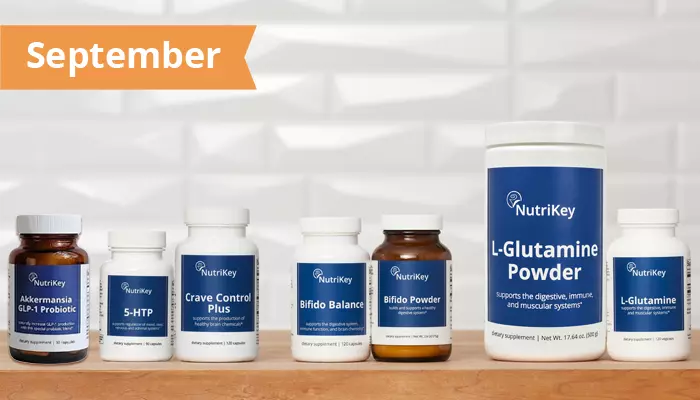
Teresa: Yeah, I think timing that one is just it can be just such a good tool that we can use, that can be helpful for, for our clients. We do also have our own NutriKey Akkermansia GLP-1 probiotic that we've had lots of success with. So like Leah was saying, Akkermansia bacteria is correlated with GLP-1 hormone signaling, and fascinating research has shown that low levels of Akkermansia are correlated to obesity and insulin resistance.
And what I find that's really interesting about Akkermansia too is that we don't have really, we don't have a food supply for Akkermansia. So if you've been on an antibiotic, chances are you may have killed off the Akkermansia that could have been naturally colonized in your intestines.
Leah: Yep.
Teresa: And if we've been on these drugs, or maybe it's been like maybe you were on a pain medication, or there was something else that would've destroyed it, it likely might not be there. So I feel like for Akkermansia, this one can be a no-brainer for people to, to use every, you know, every once in a while, just because then we can repopulate the gut microbiome with that Akkermansia. You pair it with that fiber, and you can have , this craving support combination that I think can be really helpful for people.
Leah: Yeah. For sure. Well, we do have to take a quick break. On the other side of break, we will continue to talk about how to kind of build those meals and snacks around naturally supplying your own GLP-1 support. We'll be right back.
Welcome back to Dishing Up Nutrition. Before break, we were talking about natural ways that we can bring up our own GLP-1 production. We talked about using leveraging protein and leveraging fiber, and maybe, maybe some supplements in there.
#3: also include healthy fats to increase GLP-1 naturally
But I do want to touch on healthy fats, because this is part of the mixture also that we, we can link into our bodies making their own GLP-1 hormones. And so natural fats in sensible portions, let's talk about that.
Fat stimulates gut hormones also, and the research suggests that fatty acids from natural fats can stimulate GLP-1 release. So let's think olive oil and olives, avocado and avocado oil, raw or dry roasted nuts and seeds, the fats that we get from fatty fish like salmon.
We do want to still keep it at about a tablespoon of added fat, healthy fat per meal. More isn't always better. I always joke with my clients like, "We're not eating a stick of butter here." We're just- we're, like, using a, a pat, we're using a tablespoon to make sure your vegetables taste good, that you're cooking with good healthy fats. We're, we're just looking for that balance. So again, we have protein, we've got fiber rich plant foods, and we've got healthy fats. I mean, this sounds suspiciously like regular good old nutrition.
Teresa: Funny how we often come back to that, huh? I, you know, and I often I say that to clients too where I'm like, "You know what's nice about nutrition, at least from my angle, is what's good for one thing is usually good for all."
Leah: Yeah.
Teresa: And this is just another circumstance where that rings true.
Leah: Yep.
Research shows real food in balance stimulates GLP-1
Teresa: So there probably isn't a magical GLP-1 diet that's far off from our general nutrition advice. There is a dietary pattern that tends to provide the nutrients and food structures that help the body's satiety systems do their jobs. GLP-1 responses depend on the nutrient, the amount, meal composition, individual metabolism, digestion, and even timing.
Research shows that real food, fibers from carbohydrates, fats, and proteins, all can stimulate GLP-1. So I wouldn't tell somebody, "Eat food X because it creates the most GLP-1." I'd give them an eating plan that covers all the essential nutrients in balance with one another.
Examples of meals in balance
Leah: Yes. So let's take some time to give examples of meals, because I think this is where this is the boots on the ground, the information that people can actually walk away with. So breakfast, yeah, Teresa, you mentioned this as an example earlier in the show, but I... This is top of mind for me because I actually did this. I did not do my eggs and cabbage salad.
Like, longtime listeners probably have heard me talk about, like, 18 different times now. We, I did plain yogurt, so actually I did use a coconut-based yogurt and added some protein powder in there for the protein. But then, so there's your protein source there.
We add some berries in there for some great polyphenols, antioxidants, and fiber, a little bit of natural sweetness. And then I had some pumpkin seeds that I added in there for some crunch and a couple of whole, raw almonds in there, again, just for a little added crunch.
I didn't do cinnamon, but my husband will do like, something like that with cinnamon on it too, which can just add another layer, like, kind of another fancy layer or flavor profile in there. So that's the... That's a complete balanced meal. You've got protein from the yogurt, and in my case, again, like, the coconut-based yogurts or the, the plant-based yogurts tend to be a little lower in protein, so that's why I added some of my own protein powder in there.
Mix that all up. We get the fiber from the berries and also the nuts and the seeds. And then we have the healthy fats also from the nuts and the seeds in there as well. And then, again, like, for me, I do like that extra added, that, that texture that you get with the chewing and with those seeds and some of the crunch, especially from the berries. So all of that helps with slowing digestion and, again, just making you feel like you got something out of that meal.
Teresa: Right, and I would say, like, in thinking about that, I have clients that are like, "I don't like that all mixed together."
Leah: Uh-huh.
Teresa: You don't necessarily have to mix it all together. You could have your yogurt-
Leah: Yeah.
Teresa: And then your berries, and then your nuts on the side. You know? It doesn't necessarily have to be that way. I'm like, "No, no, we can still do it."
Leah: Yeah.
Teresa: It still works. If you want.
Leah: Yeah, it's a deconstructed yogurt parfait in a way.
Teresa: Another option could be more traditional, right? A couple of eggs.
Leah: Mm-hmm.
Teresa: A couple of ounces of maybe chicken sausage. Or sometimes I like to just do extra egg whites, just keeping it in that egg family. And no, I do not throw the yolks away.
Leah: Yep.
Teresa: I buy 100% egg whites and just pour it in- just for some extra protein there. Then have some sauteed vegetables with it. I like to add raspberries or blackberries because they're super high in fiber. And then once again, adding that avocado. Avocado is a great source of fiber. And it's also a great source of fat, and so therefore it hits those satiety signals, right?
Leah: Yeah, lunch could be a big salad with greens, some kind of chopped vegetables in there, hopefully whatever's either coming in in your garden or it's available at the farmers market. Choose your protein source, whether that's some chicken or some tuna or another leftover meat. Maybe you have a little quinoa or lentils sprinkled in.
Then we've got pumpkin seeds for some crunch or maybe some sliced almonds or walnuts work really well in a salad. And then a tablespoon of an olive oil-based dressing. So we've got, you know, a lot of different textures, a lot of crunch there, but we're hitting, again, all of our bases, some protein with some meat. We've got fiber with our vegetables, and then we've got some healthy fats from, you know, some nuts and seeds and also the dressing.
Teresa: Right, and going back to the idea of volume and chewing- salads are so great for that. If you're a volume person, if you like to have more food and more chewing- you can put a lot of vegetables in there and it really doesn't, you know, it, it doesn't really change that, that energy level to go a little too heavy or too much.
Moving on to dinner though, dinner could be something like a, a roasted or a baked or air-fried salmon, broccoli and a side of a half cup cubed up sweet potato. Maybe it's tossed in avocado oil and roasted, or maybe you just put some butter on it. We could have snacks that can be balanced like we're talking about here. I like a charcuterie-like snack sometimes where I have about 10 grapes, 10 large olives, and maybe a couple ounces of summer sausage.
Leah: Mm-hmm.
Teresa: Or if you're looking for something that's like tart and savory, you could do maybe a half of a green apple with some cheddar cheese slices.
Leah: Yeah.
Teresa: Or just quick and simple, a half a cup to a cup of cottage cheese. That gives you a ton of protein. I like to put kiwi in it. Kiwi is such a great fiber source. It's lower in sugar than some of the other fruits, and so I love that. Sprinkle it with some sunflower seeds for that crunch that we were talking about. High protein, high fiber. We've got some vitamin E from those sunflower seeds. It's not as easy to find as some of the other vitamins, just a great antioxidant.
But if you notice what all of these have in common, we're pairing these nutrients together. We're not eating a handful of crackers or popcorn and then wondering why we're hungry 20 minutes later.
What dietary habits make appetite regulation more difficult?
Leah: Yep. Right. So now let's flip the question. Instead of only asking what helps satiety, what dietary habits tend to make appetite regulation more difficult?
Teresa: One big issue is a dietary pattern dominated by ultra-processed and highly refined foods. And that doesn't mean that processed foods is automatically an unhealthy choice. For example, frozen and canned foods are processed, but they still can be perfectly healthy options.
What we're talking about are foods that have been engineered to be very easy to eat quickly, and that combined refined starch, added sugar, salt, fat, flavorings, and very little intact fiber or protein.
Leah: Mm-hmm. In other words, these are foods where you can consume a lot of energy before your body even seems to register what happened.
Teresa: Right. And I heard a really interesting thing, explained as far as in chewing food-where with the ultra-processed foods, you get your first, in that first chew-
Leah: Yep
Teresa: You'll get the highest impact of the flavor, and then it just kind of turns into nothing.
Leah: Okay.
Teresa: Whereas if you're eating something like an apple, the flavors continue to develop as you chew it.
Leah: Oh, interesting.
Teresa: And I thought that was so interesting, so I've been kind of paying attention to how that works. Because I got to say, my diet isn't perfect. There's sometimes there's, you know, there's a cracker or something that'll, that'll pop in. And I have noticed that it is, like, it, as you chew it, it turns into nothing.
Leah: Uh-huh. Yeah.
Teresa: Whereas the others don't.
Leah: Right. So it grabs you right away, catches your attention, makes you want more, but doesn't exactly necessarily fulfill the promise in the end.
Teresa: Right. And I think that it perpetuates that fast eating. Because I want that flavor again. I want it again. I want it again.
Leah: Absolutely.
Teresa: Yeah. Think about how long it takes to eat an apple versus drinking apple juice or eat chicken or wild rice and vegetables versus eating a large bag of snack food. Food structure matters. Chewing matters. Volume matters. Fiber matters. Protein matters. How fast you can eat the food-
Leah: Mm-hmm ...
Teresa: That matters too.
Having cravings at night? (& problem solving what’s going on)
Leah: Yep. Yeah, so let's think about a scenario that I know you encounter, Teresa, and I encounter really often also. We sit down with a client and they say, "Oh my gosh, I have cravings every single night. It's the, you know, 8:00 PM, 9:00 PM bewitching hour sometimes."
And the tendency is to want to focus on that particular time, like what's going wrong at that time and try to fix that time. But instead of immediately kind of going to sugar addiction or what's going on at that time, what would you want to know? Because I know you sit down with clients and we try to problem solve through this all the time.
Teresa: Right. And I would say I have a lot of questions that go through my mind. And I don't turn this into an interrogation, but these are things that are going through my mind that I want to know.
Leah: Yep.
Teresa: So I'll ask them to just tell me about your day. What time did you get up, and when was your first meal?
Leah: Mm-hmm.
Teresa: How was lunch? Or what does a typical eating pattern look like in your day? Do you commonly skip meals or forget to eat or get too busy to eat? Do you have an idea of how much protein and fiber you typically eat? Because some people just don't know, right? Not everybody is as interested as we are in that data.
Leah: Yeah, totally.
Teresa: I'll have them tell me about dinner, because for some people dinner can be very busy. You know, if right now I'm in a season of life where the five in my family, we're not all home at the same time. So dinner looks very different than it did when they were little, and it looks very different than what I would imagine it will look like in the future.
Leah: Mm-hmm.
Teresa: Usually what I'm looking for here is if there is low energy intake early in the day followed by high hunger and cravings in the later afternoon and evening.
Leah: Yep.
Teresa: Other questions I might ask is how did you sleep last night?
Leah: Mm-hmm.
Teresa: Is there a lot of stress in your life right now or more than usual? Do you think this is physical hunger or mental hunger? And I'll talk about that, and I think that we, it resonates with everyone where physical hunger is where you feel it kind of in your stomach or your abdominal region where you're like, "I am really hungry."
Leah: Yep.
Teresa: Mental hunger is that, "I just feel like eating. "I just want to eat. I just want to chew. I want to sit down and watch TV, and I just want to chew on some popcorn or something."
Leah: Yep.
Teresa: Is it a habit? Like every time I sit down and watch TV, I eat something. Is it emotional or stress related? Or is it just some sort of combination of all those things? So those are the, the, the questions that are running through my head. I do not rattle them off one after another.
Leah: Yeah. Yeah, that would get a little overwhelming, but again, like, that's, that's what's going through our brains, but it's coming out, you know, a little more calm, cool, collective with the client.
Teresa: Right, and also the way they answer will dictate what question will come next.
Leah: Yes, correct. Yeah. Yeah, it's such a different approach, and so instead of, you know, putting all of our attack system on what is happening at that 8:00 PM or 9:00 PM craving, we actually are looking upstream and we're investigating what happened at 8:00 AM, what happened at noon, what happened at 5:00 PM, or what happened the night before; trying to paint that picture for people.
Teresa: Yes, because sometimes the craving problem started 10 hours earlier. Right?
Leah: Yep.
Teresa: And a cup of tea rather than a snack is not going to fix that.
Leah: Yep.
Teresa: Exactly. You know, because I feel like that's what we, we hear a lot. "Well, I just want-- I, you know, substitute in a cup of tea before bed.”
Can diet changes prevent the need for GLP-1 medications?
Leah: Yeah, yep. Yep. Yeah, so let's get to the next question, and this one definitely deserves some nuance. So the question is, can diet changes prevent the need for GLP-1 medications?
Teresa: Well, and actually, I would like to reframe the question. Dietary changes can absolutely improve appetite management, blood glucose, cardiovascular risk factors, and weight related health for many people.
But we can't promise that following the right diet will be the solution to everything. Obesity, it's multifactorial. Genetics, medical conditions, medications, sleep, environment, socioeconomic circumstances, life stage, and many other factors are, are all a part of this.
For some people, lifestyle changes may be enough to reach their health goals. For others though, medication may be another tool in the toolbox. Although these aren't opposing choices. If someone is on a GLP-1 medication, it is still important to meet with a dietitian to make sure you're meeting dietary needs, and I would say in some cases it's even more important maybe.
Learn More About Nutrition Counseling
Especially if you're eating a lot less overall, it's critical that you're getting in adequate nutrients because if you're not having very much, we need to make sure that we are, that quality is our, our focus here.
Leah: Yeah, every bite, every bite counts.
Teresa: Yes. Yep.
Wrap up
Leah: All right. Yeah, lots of great information. Let's just bring this home for people as we're wrapping up our show. So if someone remembers only one, two, three things from this episode, what do we want them to remember?
Teresa: Well, first I would say your body, it already produces GLP-1. It's one of the hormones involved in that gut-brain communication that helps regulate blood glucose, digestion, appetite and satiety. And food naturally stimulates GLP-1, particularly animal protein, fiber-rich vegetables and carbohydrates and healthy fats.
Leah: Don't look for one magical GLP-1 food. Build satisfying meals instead, and make sure you're getting adequate food volume and that you're eating enough. So maybe the goal isn't to ask how can I make my body act like I'm taking a GLP-1 medication? The better question may be how can I eat in a way that helps my own appetite regulation system work the best that it can?
Teresa: That's right, and that's where the basics become incredibly powerful. Eat enough protein and vegetables, get your fiber in, include healthy fats, choose whole and minimally processed foods more often, pay attention to hunger and fullness, move your body, get adequate sleep and remember, health is bigger than the number on the scale because the goal isn't to win a battle against hunger, it's to understand your body well enough and work with it.
Leah: And on that note, we'll wrap up today's episode. Thank you all for joining us. Our goal at Nutritional Weight & Wellness is to teach people the power of real food and how life-changing it can be. It's a simple, yet powerful message. Take care, everyone.
Share this Podcast
Upcoming Podcast Episodes:
September 14: Curb Cravings the Natural GLP-1 Way
September 21: Nutrition for Colon Cancer Recovery
September 28: Why Sugar Might Make You Sick Longer