Not Getting Enough Fiber? Start Here
June 29, 2026
Fiber is having a moment, but it's much more than a trend. In this episode of Dishing Up Nutrition, registered dietitians Leah Kleintrot and Teresa Wagner explain why fiber is essential for healthy digestion, balanced blood sugar, gut health, appetite control, heart health, and long-term wellness. They break down the difference between soluble and insoluble fiber, how much you really need each day, and why most people fall far short of the recommended amount.
You'll also discover the best real food sources of fiber, practical ways to increase your intake without digestive discomfort, and why whole foods often beat processed "high-fiber" products. If you're looking for simple nutrition changes that can make a big impact on your health, this episode is a great place to start.
Listen below, or subscribe to our podcasts through Apple Podcast or Spotify.
Join our Dishing Up Nutrition Facebook Community!
A private, supportive space to ask questions, share ideas, and get bonus content from our nutrition team.
Similar Podcast Episodes
Transcript
Leah: Welcome to Dishing Up Nutrition, brought to you by Nutritional Weight & Wellness. Today we're talking about a nutrient that has been getting more spotlight in the health and nutrition world lately. And you may be seeing it as a buzzword in the media or at your doctor's office. Food companies are highlighting it on packaging, and people are searching for ways to get more of it. We're not talking about protein today though; we're talking about fiber.
Fiber has been around forever, obviously, but lately it's been having a big comeuppance, it's having a major moment. And as dietitians, we're excited about this trend because most Americans are not getting nearly enough fiber. Yet fiber plays a huge role in digestion, in blood sugar regulation, with gut health, appetite control, and even long-term disease prevention. Before we dive in, let's just take a moment, introduce ourselves. I'm Leah Kleinschrodt, Registered and Licensed Dietitian.
Fiber influences many aspects of health
Teresa: And I'm Teresa Wagner, also a Registered and Licensed Dietitian. And you may be wondering why fiber is getting more attention these days. And I would say that fiber is becoming more popular because we're learning that it affects much more than just digestion. For years, fiber has been mainly discussed as something that helps keep you regular.
And while that's true, research shows that fiber influences many aspects of health. We know that higher fiber intake is associated with better blood sugar control, lower cholesterol levels, improved gut health, reduce risk of cardiovascular disease, lower risk of colon cancer, better appetite regulation, and improved metabolic health.
What are some reasons fiber is trending?
Leah: Yes, and so one reason fiber has gained attention recently is the growing interest in the intestinal microbiome, or in simpler terms, we call it gut health. Our intestines contain trillions of bacteria, and many of these beneficial bacteria rely on fiber as their food. When we feed the good bacteria, this fiber, they produce a lot of different compounds, but specifically they produce something called short chain fatty acids. So these little guys help support the gut lining, they reduce inflammation, and even influence immune function and brain health.
Teresa: Another reason fiber is trending is because of the popularity of GLP-1 medications. People taking these medications are learning that fiber can help support digestion, bowel regularity, blood sugar balance, and satiety. Constipation and sluggish digestion are common side effects of GLP-1s, so increasing fiber can help to combat this. Although I would say we have to be careful here. Because it also can be a part of the problem. So we really have to watch that fiber intake when we're on a GLP-one and how to best regulate that.
Leah: It's that fine-tuning to the individual, right? Which is what we do in clinic day in and day out. And perhaps most importantly, people are realizing that while many trends come and go, increasing fiber is one nutrition strategy that most diet camps can agree upon. And that this consistently shows up in the research of just how many benefits are like kind of across the span of how many health conditions. So it's one that a lot of people agree upon that you're probably not going to go wrong by increasing fiber, finding ways to get more through food.
How much fiber is recommended?
Teresa: Right. And I think that a question that I hear often from my clients is, that just seems like a lot of fiber. How am I going to do this? And for most adults, the recommendation is around 30 grams of fiber per day. Unfortunately, the average American only gets around 15 grams per day. And that estimate might even be a little generous. That means that most people are getting only about half of what their body needs.
Leah: And so when we're working with clients, sometimes they come in and they're curious, like, you know, how much fiber should I be eating? Or I wonder where I'm at, or we've identified like, you know, well, we're probably trending a little low in fiber. But one way just to know for sure is let's track. Let's track for at least a couple of days. Eat the way you normally eat and let's see how much fiber you're currently taking in just doing what you normally do.
And oftentimes people will come back, and I've done this before. I've had personal experience with this. You come back and you're a little surprised actually of how little fiber that our clients or like I was actually surprised I was below twenty grams a couple of days in terms of fiber. So even when you think I'm eating a lot of fiber, sometimes just doing a little tracking and putting it on paper, pencil, or putting it into an app can show you a different story.
So again, like we think if we're splashing some of those vegetables in each meal or like we're getting some of those good colors on our plates, that's a great move. And yet sometimes we still may be falling short of that fiber goal.
Teresa: Yeah, and I have a similar story as you, Leah, because you know I like to track and you look at those fiber totals and it is sometimes shockingly low considering some of the food choices that you're making. You would think it would be a different picture. So I think that exercise in tracking is just very eye-opening sometimes to see are the fruits and vegetables that I'm choosing a good fiber source?
What fiber is & why it matters
So while we're talking about fiber, maybe we should just take a minute here to explain what fiber actually is and why it matters. Fiber is an indigestible part of plant foods that your body cannot break down. There are two main types of fiber in foods, soluble and insoluble. Soluble fiber dissolves in water and forms a gel-like substance that absorbs moisture. Think of how a chia seed turns into a gel when soaked in liquid. It acts like a glue that holds stool together so it can move smoothly through the GI tract. Soluble fiber can also help lower cholesterol by binding to dietary cholesterol and eliminating it through the stool so it can't be absorbed.
Insoluble fiber, on the other hand, adds bulk to stool and helps move waste through the digestive tract. Insoluble fiber does not dissolve in water and remains mostly intact through the digestive system. Think of it like roughage from the hearty vegetables like broccoli. Most plant foods contain a combination of both of those fibers.
Leah: Fiber also slows down digestion. So when meals contain adequate fiber, glucose enters the bloodstream much more gradually. So this can help prevent dramatic blood sugar spikes and crashes, kind of that roller coaster blood sugar effect. So for people struggling with cravings or energy dips and fluctuations throughout the day, we do want to focus on eating a balance of protein, healthy fats, and real food carbohydrates that help with the blood sugar balance and the fiber from those real food carbohydrates is one of those big blood sugar anchors. It's one of the big keys to keeping you stable after a meal.
Teresa: Yeah, and heart health, that's another big benefit that we talk about with fiber. Soluble fiber binds to cholesterol in the digestive tract to help remove it from the body. Research shows that higher fiber intake is associated with lower cardiovascular risk. And I just want to remind people though, association is not causation. So people who tend to eat more fiber also tend to care more about health in general.
Therefore, they engage in behaviors that are conducive to lower cardiovascular risk. They probably don't smoke. They drink less alcohol, tend to exercise and choose other foods that are also good for the heart. So while fiber is good, there are other things that we can do for our cardiovascular health.
Leah: For sure. Yes. I mean, when we work with our clients who have concerns around cholesterol, blood pressure, maybe they've had a heart attack in the past. It's not just about fiber, it's a part of the picture, but there's other things like that we're layering in there too as well, right? And then there's satiety. This is something you will notice on a meal to meal basis.
I mean, fiber takes up space in the stomach. I've just mentioned it slows digestion. And it can help people feel satisfied for a lot longer after eating. So it's a key anchor point. I use the word anchoring a lot with my clients. I think people can kind of picture like anchor boats, like it keeps you from drifting too far one way or another. But fiber is a great anchor.
And this is as opposed to eating more quick carbs, more refined carbs or the ultra-processed carbs that typically don't have the fiber. So they give you a lot of energy, they break down into a lot of sugar. But they don't necessarily fill you up and hit that satiety button.
I recently had an example of this from a family gathering that I wanted to share. It stood out so much because it's not the way that I normally eat, but we had a family gathering. We made a brunch at our house, kept it pretty simple. It was a bunch of scrambled eggs. I had made some gluten-free pancakes or a couple little other side things. So for me, being gluten and dairy free, I focused mostly on okay, like I can get some good eggs, get some protein in there.
I took a couple of the gluten-free pancakes, put some butter on there for the good fat, right? Ate that. And I remember feeling like, okay, I ate and I knew I had some protein. I knew I had some healthy fat. So those are some other big blood sugar anchors that we had. But I remember thinking, you know, about 30 minutes or an hour or so after that meal, even though I knew I had kind of eaten enough from an energy standpoint, I was still wanting to eat more.
There was still something missing from that particular meal that made me think, like, you know, I need to keep eating to try to find whatever it is that I'm missing from this meal. And the only thing that I can think from that meal was okay, I had protein, I had fat, but the other blood sugar kind of anchor that I was missing was the fiber. And typically when I have a breakfast, I have a cabbage salad as part of my breakfast.
Sometimes I mix it up with some other veggies, but I try to make sure there's a good amount of vegetables and usually it's that cabbage salad along with my breakfast. So to me, the aha moment was that I was missing the fiber from that meal and I just didn't have kind of that stop gap there to say, like you're done eating. It was just one of those things that I was missing and I really truly missed it in that meal. I could feel it in that meal.
Teresa: That is so interesting, and I feel like that's introspection that only a dietitian would have.
Leah: That's true. Very true.
Teresa: And also as you were telling that story, I was like, I wonder how many heads of cabbage Leah has eaten over the last eight years.
Leah: I keep the cabbage, you know, system afloat myself, that's for sure. Yeah.
Teresa: But I think it's a really interesting point. And I think so many people struggle with figuring out that stop button. They know that they're full, but they can't figure out why they just want to continuously eat. And so perhaps fiber is that missing piece.
Practical ways to increase fiber in the diet (#1: certain fruits)
So maybe we should talk about some practical ways on how we can increase fiber in our diet and see if that experiment is worth it for people to maybe assist in that. So when people hear eat more fiber, they often think something like bran cereal or other processed grain foods.
But there are so many delicious real food options. Berries, one of my favorites. Three-quarters of a cup of raspberries contains six grams of fiber, and blackberries fall right behind that. Fruits with skin like pears, peaches, and apples, are good sources of fiber as well. A medium pear can provide around five to six grams of fiber.
You've probably heard that eating prunes to support regularity for people who maybe are constipated, and certainly people swear by this. But I would say keep in mind dried fruits, like prunes, are high in sugar. Three prunes contain only about two grams of fiber, but about 11 grams of sugar. And I just want to say for a fun fact with prunes, it's likely less the fiber and more so the type of sugar that's in it. Prunes contain sorbitol, a sugar alcohol known for its laxative effect. So the magic of those prunes, it may lie more with that sorbitol than with the fiber that's found within it.
Leah: That’s an interesting little tidbit. And again, probably when you're constipated, that matters less. It matters more that it works, right? But it is interesting to know because everybody thinks it's more the fiber from that than anything else. So those are some great examples in terms of fiber from fruits.
High fiber, low starch vegetable options
Low starch vegetables are always going to be one of our big go-to's for sources of fiber. They're packed with nutrients, very minimal sugars, and then you get the fiber to go with it.
The cruciferous vegetables. So there's my cabbage in there, but that's your broccoli, your cauliflower, kale, brussels sprouts, all of these guys. These are going to be great options. Peas are surprisingly high in fiber. Green beans are awesome.
Carrots, celery, and even some of the starchier veggies like winter squash, sweet potatoes, these contain a good amount of fiber. Some people like to eat them with the skin on, some people not so much. I mean, either way you're going to get a decent whack of fiber. You'll get more by eating the skin. But any of these are going to be great options for getting in some of those natural fibers.
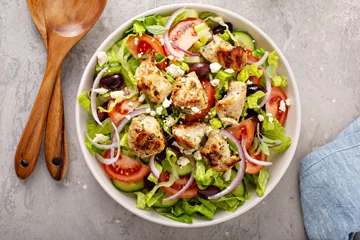
Some people think, and I fell into this camp too till I actually researched it, that when you eat a salad, you think, I get a ton of lettuce, I have a ton of spinach in there. This is a great source of fiber. And these greens are great, they're healthy for lots of reasons. They're not the best sources of fiber, though. A cup of raw spinach contains less than one gram of fiber.
So that just means more of the fiber from that salad is probably going to be coming from the other toppings that you're putting on the salad versus the greens themselves. So we want those greens for their vitamins, for their minerals, for their polyphenols, all the other plant compounds, but they're not going to be your biggest source of fiber in that meal.
Teresa: That was one of the things that I noticed that the salads that I was making with the greens and cucumbers and celery and bell peppers, they're all great foods, but they're not high fiber sources.
Leah: They're not your highest fiber sources, definitely. Yeah.
Seeds are high in fiber
Teresa: One of the simplest ways to increase fiber is to incorporate more seeds into your diet. For example, just a couple of tablespoons of chia seeds provides six grams of fiber. They're one of the most fiber-dense foods available. You may want to soak them for a few hours until they become kind of gelatinous if you prefer a less crunchy texture when you're eating them. You can make an overnight chia pudding with yogurt, canned coconut milk, or other nut milk.
You can add them to protein shakes or just soak them for a few hours in plain water. Ground flax comes from a seed and it is similar to the chia seed option in that it's easy to add to smoothies and to yogurt. We have a recipe on our website, weightandwellness.com, called Noats. It's spelled N-O-A-T-S. It's kind of a play on words because there's no oats in the recipe.
And it's an oatmeal alternative made up of hemp seeds, chia seeds, ground flax seeds, and then a milk or a nut milk base. It tastes similar to like a porridge, but it's made of these fiber packed seeds instead of grains. And it's actually really good. Porridge, I feel like, makes it sound not so good. It is actually quite delicious. I like to throw in a scoop of protein powder to sweeten it up. Otherwise, it's not so sweet. You could always use a little bit of stevia or something to sweeten it up if that's your preference.
And then top it with some berries for even more fiber and antioxidants. And this combination, one serving of the Noats recipe plus three quarter servings of raspberries is 11 grams of fiber. And so if we're aiming for that 30 grams of fiber and we start our day with this as our breakfast, you're a third of the way there.
Leah: Yeah, if you break it down on a per meal basis, if you eat three meals a day to hit 30 grams of fiber, you're aiming for around 10 grams or so of fiber in a meal. I'd say most of my clients do three main meals and then there's probably a snack in there somewhere. So again, like if we're focusing on real foods, trying to get some fiber in that snack.
Now we're maybe more like seven to eight grams of fiber per meal. So in general, if you can just kind of think if I can get somewhere between seven to ten grams of fiber in a meal, you're probably going to hit that daily total of around thirty grams or so.
Teresa: Right. And there's no magic in the number 30, right? It was just something to shoot for. You might be a little under, you might be a little over.
Nuts are high fiber
Leah: Yeah, depending on the day. We have to have a baseline to shoot for somewhere, right? So similarly to the seed idea, nuts are another way to add fiber to your diet. So think almonds, think walnuts, pistachios, hazelnuts, pecans. The catch with these is that they are calorically dense. So you do need to be mindful of a serving size with these.
Leah: You want to start maybe a tablespoon or two at a time. I mean, I can speak from experience. It can be so easy to eat nuts, especially if they have a little salt on them. It can be so easy to eat them like popcorn. You do probably want to measure them out and just be very mindful of that portion size.
Teresa: Yeah, absolutely. I can eat nuts the same way. It's a very dangerous food in my world. In any case, it's time for us to take a break. When we come back, we're going to talk a little bit more about beans and legumes and other high fiber options.
-----
More on incorporating high fiber foods: beans, legumes, lentils & whole grains
Leah: Welcome back. We've been focusing on fiber for this show and we just talked a little bit about fiber from nuts and seeds. But Teresa, you were going to talk about a different category of foods that actually is a great source of fiber, more in the carb category, and that's like the beans, the legumes, lentils, things like that.
Teresa: That's correct. And I feel like as we talk about this, this is probably the category everybody's been waiting for. So let's talk about legumes, beans, lentils. As you said, these foods are high in fiber. For example, lentils in just a half a cup provides around nine grams of fiber. Black beans and chickpeas are around five to six grams of fiber per half cup. And similar to nuts and seeds, watching portion size is key. Beans, lentils, legumes, they're carb heavy. So keeping them to a half a cup serving size is ideal. A big bowl of rice and beans will put you into a carb overlap.
Leah: And same idea with whole grains. Like we mentioned earlier, when most people think about increasing fiber, many people think about going to the cereal aisle and you pick out something labeled as high in fiber. We see a lot of processed grain foods that are marketed as a good source of fiber. So this could include the whole grain breads, tortillas and pastas and cereals, chips, crackers. Again, you may see that bright label on the on the front that says high in fiber.
But these are heavily processed foods and contribute less fiber than you might think. For example, one serving of a cereal that's labeled whole grain or multigrain is commonly around three to six grams of fiber. One slice of whole grain bread is usually around two to three grams of fiber.
And a cup of brown rice has three to four grams of fiber. And we love brown rice. It can be a great grain, but just remember from a portion size perspective, a cup of brown rice has three to four grams of fiber. But then also has 50 grams of carbs total along with it. So you can kind of see the mismatch between it's high carb, not as much fiber as you would think for a cup of brown rice.
So that's why we say, let's get some of that fiber from some of these whole grains, but let's keep it to more like a half a cup portion size. So it keeps the carbs a little bit more reasonable. And then let's grab some of that fiber from some other groups like the vegetables. So again, we do want to be wary of the abundance of carbs that come along with those whole grain products.
Teresa: Well, I also think it's important to point out how these whole grain foods are processed. During manufacturing, grains are milled, they're puffed, flaked, extruded, or refined into fine particles. While the grain may still be technically containing some fiber, processing can change how the carbohydrate functions in the body and lead to more rapid digestion and quicker blood sugar spikes. Food manufacturers fortify products, like the high fiber bars, crackers, drinks, pasta, by adding isolated fibers so that they can market it as a high fiber food. These added fibers increase the number of grams of fiber listed on the nutrition facts panel, but they are not the same as the naturally occurring fiber found in intact plant foods.
Added fibers provide some benefits. But they don't come packaged with the full range of nutrients, antioxidants, phytochemicals, and natural food structures found in whole foods. So a product may be marketed as whole grain or high fiber while still containing significant amounts of refined flour, added sugars, or highly processed ingredients.
For example, a box cereal with eight grams of added fiber is not necessarily the equivalent to getting eight grams of fiber from, say, broccoli, beans, or berries. Real whole foods provide fiber within a natural food matrix with additional nutritional benefits.
Practical examples of adding real food fiber to your diet (gradually)
Leah: So, what are some practical examples of adding real food fiber to your diet? I think one mistake some people make is just trying to go from eight or ten grams of fiber in a day to thirty grams of fiber in a day and doing that overnight or doing that in two days. You can quickly find yourself in a world of discomfort with bloating, gas, diarrhea, and surprisingly even worse constipation. So too much at once isn't always a good thing.
So instead, let's increase gradually. Here's some ideas on how to gradually work on that fiber. For breakfast, you can add three-fourths cup of raspberries, which is six grams of fiber, and a tablespoon of ground flaxseed to yogurt. So that's another two grams of fiber. So you have a total of eight grams of fiber in a great breakfast. And the yogurt parfait idea could be a great snack, also. So use that as a breakfast or snack idea.
Or you could take three quarters cups of a frozen stir fried blend of veggies. So it's usually a blend of onions and peppers, maybe a little broccoli in there, and add two tablespoons of black beans. The veggies and the black beans have three grams of fiber each, and you mix these into your scrambled eggs. So it's kind of a Tex Mex type of take on breakfast.
So that ends up with six grams of fiber in your breakfast. If you add maybe a few slices of avocado, you bump that up by a few more grams of fiber. Avocado is also great in a protein shake. It makes it creamy and doesn't detract from the flavor of other things in that smoothie. So a half of an avocado has seven grams of fiber total. So toss that half of an avocado into your smoothie.
Teresa: I think what I was tracking, that was the one that I was the most surprised about was how much fiber is in avocado, especially because it's very low carb. And speaking of avocados, I normally have those at lunch. And so for your lunch, you could top your salad with sliced apples or pears for about two grams of fiber, add a spoonful of sunflower seeds. It'll get you about one gram of fiber. But with that salad, maybe with a half of avocado, that's about 12 grams of fiber.
Or instead of apple or pear and sunflower seeds, you could add a half a cup of chickpeas and a half of that avocado once again. And now your salad is nearly 15 grams of fiber. And of course, the more you can bulk up your salad with vegetables, the better, because then you get all those other nutrients we were talking about, the phytochemicals, the antioxidants, all the wonderful things that come within that food matrix.
Leah: Another great salad example is on our website. It's our jicama salad.
Teresa: It's a great source of fiber. That with some avocado.
Leah: Yeah, that's a great idea. And so that jicama salad that's on our website is some sliced jicama. You slice up some of the bell peppers, green, red, yellow, you slice up some cucumbers in there, and then you make kind of a little dressing out of it with some lime juice, avocado or olive oil, some cilantro, salt and pepper for some seasoning.
And the recipe as it's written makes somewhere between six to eight servings. And so I plug that recipe into a calculator. And so if you do six servings, that's about six grams of fiber in one serving. So if you make a batch of that salad and you eat one serving every day for the next, you know, three-ish days, it'll probably last about three, three to maybe four days in the fridge.
That's a great way to just supplement a little extra fiber. Maybe you're not doing a jicama salad with your regular salad at lunch, but if you're doing a dinner where you're having a meat and a potato and some kind of vegetables in there, you could supplement a little jicama salad in on the side for some extra fiber.
And even thinking about dinner time, if you're looking at your plate, about half of that plate should be vegetable. So maybe part of that could be that jicama salad. Maybe this is where you are turning to the broccoli and the asparagus and some of those more staple types of vegetables at dinner.
So those frozen veggie mixes are a great way to do that. You can substitute some riced cauliflower in for regular rice. If you're making a soup, maybe not so much this time of year, but more in the fall and in the winter, whatever veggies you have left over in the fridge, whichever ones are kind of on their way out the door, that would make great soup vegetables.
Veggies also taste great grilled during the summertime. So think about again, asparagus, even broccolini, that's like the longer broccoli stalks, bell peppers, onions, just anything you can think of, throw those on the grill and give it that good summertime char.
Teresa: Right. And it's just so nice outdoor cooking, right? Keep the kitchen nice and clean. For snacks, I would say along with the protein that we want to have that we're always encouraging people to eat, to increase that fiber, maybe we have cut up carrots, about a cup of carrots. That gives us about three and a half grams of fiber.
We can dip that in guacamole, going back to that avocado we were talking about for another seven grams of fiber. So that's in the neighborhood of ten and a half grams of fiber. Or if you want something, maybe a little sweet, salty combination, two kiwis will have four and a half grams of fiber plus a quarter cup of pepitas or pumpkin seeds for another three grams of fiber, and that gets you to seven, seven and a half grams of fiber.
Leah: And that’s just a snack, which is great.
Teresa: And that's just in a snack; yep.
Importance of hydration
Leah: And let's not forget about hydration. As fiber intake increases, water becomes even more important. So, like I mentioned earlier, increasing fiber at first can easily lead to some uncomfortable bloating or gas or constipation or just like weird bowel changes. Fiber works best when it has adequate fluid available.
Teresa: Yeah, I would agree. Water is so important when increasing fiber, especially when you start a fiber supplement. These supplements are becoming more and more popular as an easy way to boost fiber. You've likely seen fiber gummies advertised or been told by your doctor to start taking a fiber powder for regularity. The problem with a lot of these is that they're full of sugar or artificial sweeteners like aspartame. And then they also sometimes they have artificial food dyes in them as well.
So, if I'm going to be recommending a fiber supplement, I recommend a powder that is just the fiber without all that extra stuff. Sun Fiber is an example that we carry in our stores and on our Nutrikey site. The only ingredient is guar fiber with no sweetener or color. And this one tends to be really well tolerated, not causing all the uncomfortable bloat and gas that comes with many fiber supplements.
It's an option to help people who have constipation. It's an option to help those who have diarrhea. And it's a good option for those who are regular and just want to increase their fiber. It's a very well tolerated fiber supplement.
Leah: Yeah. I've used it before myself. I have several clients who are currently using it and I hear from them, they say they really like it because it does mix really easily. It's not gritty.
Teresa: No it just disappears.
Leah: Yeah it just disappears. Like you don't even know that it's there. You can mix it into other things too, but even just water if they're taking some of their other supplements, it's just easy and it's tasteless. So that one is a really popular fiber supplement.
Teresa: Yeah. And I guess one thing to note too, for people who have IBS, SIBO, IMO, some of those digestive conditions that are very sensitive to fibers, Sun Fiber actually works for them typically too.
Leah: Exactly. We have another option called Fiber MGP that has the fiber benefits, plus it is designed to naturally increase our own GLP-1 production. It's a mixture of different fibers and prebiotics and things like that. And the Fiber MGP powder feeds bifidobacteria, so it helps with overall gut health. It also has been shown to increase a strain called Akkermansia, which is your gut bacteria that supports that natural GLP-one production.
So and when we think about GLP-ones or a higher level of that, usually people were just looking for a little more satiety with meals. We reduce some of that food noise or some of that hunger, some of those food cravings. I've had a couple of clients use this one also. I think it's a tropical kiwi flavor. So this one does have a little bit of a flavor to it.
Teresa: Yeah. It's delicious.
Leah: Yeah, it's delicious. It works well and complements a lot of smoothies. It works well in water also. So I've had some clients use this and been pleased with it also.
Teresa: Yeah, and then Akkermansia is so good for your gut microbiome, supports that mucosal layer. And another high fiber option that's also great for that Akkermansia is pomegranate seeds because of the phytochemicals and because of the fiber that's within the pomegranate. So if you're looking for a recipe for that one, the kale salad has pomegranate seeds in it, I believe. Or maybe it's the shaved Brussels sprouts. Either way, both make for a high fiber salad. Just add a protein and you're set to go.
How to know if you’re getting enough fiber (& how to know if it’s working)
I guess you might be thinking now, okay, I'm trying to increase my fiber intake. How can I tell if I'm actually getting enough? How do I know if my efforts are working? And I will say there are some clues. The first is simply tracking your intake, like we were talking about earlier. Just track it for a few days to see where you're at, and then gradually increasing to try to hit around that 30 gram mark.
Another clue is digestive regularity. A healthy bowel movement should generally be consistent once or twice daily, well formed, easy to pass, and feel complete. You should also notice better satiety after meals, more stable energy, and perhaps less extreme blood sugar fluctuations.
Leah: You can also look at your plate. Is it consistently filled with a couple of cups of vegetables and a little bit of fruits, legumes, nuts and seeds? If these foods are present throughout the day, you're likely moving in the right direction.
Signs you may not be getting enough fiber
Teresa: Yeah, and then on the flip side, what are the signs that you're not getting enough fiber? Unlike other nutrient deficiencies, there isn't a lab test for low fiber intake. Instead, we look for patterns. Are you constipated? Do you feel hungry shortly after meals? And have difficulty feeling satisfied? Is your stop button malfunctioning?
Do you experience blood sugar swings? Do you have elevated cholesterol levels? While these symptoms can have many causes, inadequate fiber is certainly one possibility to consider. Maybe not the first dietary strategy to employ, but when you are looking to optimize, fiber may be something that we want to try to experiment with.
Leah: And one thing we notice clinically is that when clients come to us trying to improve their diet, the focus is often on what to remove or restrict or what can we take away from their diet. Maybe they're already avoiding carbs, maybe they're cutting calories already. But we like to kind of flip that around a little and say, What can we add?
Adding fiber-rich foods is often one of the simplest and most effective changes people can make. And this naturally crowds out the less healthy foods. If you're consistently overly hungry or having constant cravings, that's a sign something may be missing from your diet. So adding in more fiber and nutrient dense foods should make you feel more satisfied throughout the day.
Teresa: And of course, small, consistent changes really do add up. Adding even one extra serving of a fiber-rich vegetable, fruit, bean, or seed each day can move you closer to your goal. And a quality fiber supplement like the Sun Fiber or the Fiber MGP powders can help you meet your goals while working on increasing the fiber in your diet.
Leah: Now, before we end today's show, we wanted to mention that we have a fun challenge in the works around this concept of fiber that anyone can sign up for. We aren't quite ready to spill the details just yet, but you're going to want to join us on this one. So just stay tuned and keep checking upcoming emails from Nutritional Weight & Wellness about that.
So I want to thank you all so much for joining us in our discussion today. If you enjoyed this episode, the best way you can support our podcast is to share it with a friend, share it with a family member, or anyone else you can think of who could benefit from learning more about fiber. And if you yourself are needing some help with your health goals, whatever they may be, please come meet with me or Teresa or any one of the other dietitians at Nutritional Weight & Wellness.
We work with you where you're at and make goals in a way that feels good to you. The clients that tend to have the best success with their goals are the ones who meet with us regularly, no matter what their diet looked like that week or that month. Remember, we're in network with many insurance plans. So if you have questions about insurance, about how our services work or anything else, give us a call. 651-699-3438 or visit our website at weightandwellness.com.
Check On Insurance Coverage For Nutrition Counseling!
Our goal at Nutritional Weight & Wellness is to help each and every person experience better health through eating real food. Thanks again for listening, and we'll talk to you next time.
Share this Podcast
Upcoming Podcast Episodes:
October 12: Chef Marrianne’s Guide to Healthy Crockpot and Instant Pot Cooking
October 19: MCAS and Histamine Intolerance, From Symptoms to Support
October 26: The Sleep-Cravings Connection