Talking Kids Nutrition with Captain & Cat
August 3, 2026
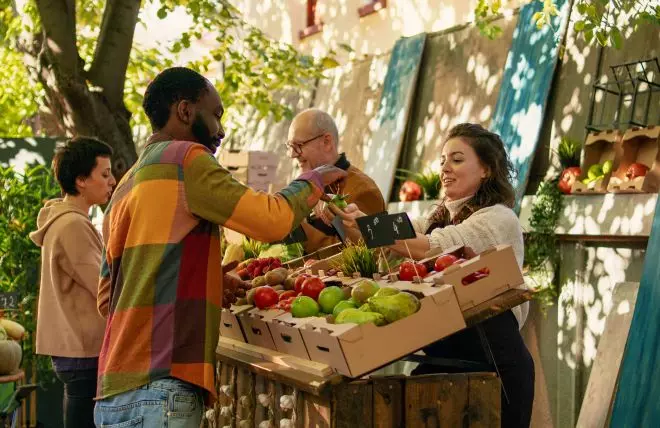
Where does your food really come from, and how can we help kids get excited about eating it? In this special episode of Dishing Up Nutrition, Teresa Wagner sits down with the creators of the popular YouTube Kids channel Captain and Cat to explore how storytelling, music, and real farm adventures are inspiring children to learn about nutrition. From apple orchards and dairy farms to regenerative farming and seasonal eating, they discuss the people behind our food, why curiosity is the key to healthy habits, and how making nutrition fun can shape a child's relationship with food for life.
Listen below, or subscribe to our podcasts through Apple Podcast or Spotify.
Join our Dishing Up Nutrition Facebook Community!
A private, supportive space to ask questions, share ideas, and get bonus content from our nutrition team.
Similar Podcast Episodes
Similar Articles
Inside A Nutritionist’s Kids’ Lunch
Foods to Help Boost A Child’s Moods (+ Signs Of Nutrient Deficiencies)
Transcript
Teresa: Welcome to Dishing Up Nutrition. My name is Teresa Wagner. I am a Registered and Licensed Dietitian with Nutritional Weight & Wellness, where our mission is to help each and every person discover a real health through eating real food. This mission is not limited to adults; it includes kids as well.
Intro to Captain and Cat’s content
Today we're welcoming Kids Media Team that has become a favorite among families who care about healthy habits, curiosity, and joyful learning, Captain and Cat. They're an award-winning children's studio known for turning everyday topics into catchy songs and colorful adventures, and that includes helping kids understand the foods they eat and where those foods come from.
If your family spends any time on YouTube Kids, you've probably seen their work. With more than 200,000 subscribers and millions of views, Captain and Cat create upbeat educational content that makes nutrition feel fun rather than complicated. Their videos explore farms, factories and food growing environments, giving kids real world look at how ingredients travel from the field to their plate.
It's learning through music, movement, exploration. The kind that sticks long after the screen turns off. And that's what we want, right? We want them to watch the video, learn something cool, then turn the screen off and go explore. Captain and Cat are the creators of “Explorasaurus” adventure series that takes kids behind the scenes to places like orchards, dairy farms, and food production facilities.
For parents and educators trying to build healthy habits early, Captain and Cat offer a playful way to introduce concepts like whole foods, where foods come from, and why trying new things matter.
So whether you're raising a picky eater, a budding chef, or a kid who just likes to eat, Captain and Cat are helping families make nutrition approachable and fun. And today we get to dive into how they do it. So before we get started, can you tell us who are Captain and Cat and what is your background?
Cat: Wow. Teresa, first off, by the way, that was an incredible intro. I'm literally like, okay, we're good. Thank you guys so much. Check it out, YouTube kids, Captain and Cat. Have a great day, everybody.
Captain: Well, let's give you the quick background. Very quick background to understand where we came from and why we do this. I'm Kevin. This is Jordan. Hello. I'm Captain. He's Cat. We met in college at Northwestern. We were roommates. We were in a fraternity together. And we were in a sort of experimental band. It was one part music and one part variety show.
Cat: It was called slow, weird, and melodic because that's what it kind of was.
Captain: And we would take it on campus. We would actually set up on campus and we'd have instruments and a blanket and egg shakers. And we would play our songs and try to get people walking by, students going to class to stop and make music with us. And we noticed that kids, if they were on campus with their parents, would stop and really liked what we were doing.
And that was kind of the seed of this whole thing was maybe kids like this two man show that we have. So we moved out to LA and we started performing for kids at kids parties and schools in Los Angeles.
Cat: We did 10 years of a bubble show, which I'm not sure if you know what a bubble show is, but we would fill a giant kiddie pool with bubble mix and we would do an hour long show as these characters, Captain and Cat. And the finale was I would stand on my head on a platform inside the bubble pool, and Captain would put me in a bubble while I was upside down.
We called it the most dangerous move in bubble entertainment, and it really was. I still honestly every once in a while I'll wake up with like a terrible nightmare of like remembering what it was like, you know, or like falling in the middle of a show and I wake up right as I fall. But we did that for about ten years. And so that was kind of where we really, really honed our act and we honed our music. You know, it was kind of like a modern day old timey vaudeville act. And then during the pandemic, obviously those parties stopped.
And so we started putting our stuff online, which was for three or four years, pretty much just our parents telling us it's cute and interesting, and our wives getting impatient with us that we're spending all this money creating content on our own dime. H and R Block called it a very expensive hobby.
Captain: And then 2023, our song Jen the Fire Engine won the award for the best children's song of the year in the John Lennon songwriting contest, which short of the Grammys is the best award you can get as a children's musician. And that really set us off. Our music video for it on YouTube went viral, started getting millions of views.
And then YouTube Kids reached out to us and said, We really like what you guys are doing. We like your music and your skits. And we'd like to invite you to be a featured channel on the YouTube Kids platform. And so what that means now all of a sudden is our episodes and our content is featured on the homepage of YouTube Kids, which is like being on Netflix, but for kids.
So you log into YouTube Kids and there we are. And it went from, I think we had 5,000 subscribers to now 200,000 and 200 million views and really gave us a chance to explore on our own what kind of content do we want to make? You know, now we have this huge platform. Let's make sure we're using it to the best way possible to make a positive impact on kids.
Educating kids on where their food comes from & why to choose real, healthy food
Cat: Then starting about a year ago, we approached Sugar Bee Apples about doing a song about apples because we kind of love the idea of an apple a day and making a song around that. And they're actually like, we got something better for you. Why don't you come out and meet the farmers and film about the harvest?
And so we went out there really not knowing what to expect at all. Honestly, I expected to find like giant robot creatures walking around shaking apple trees and then having the trees fall off and then it all onto an assembly line, but we were blown away, honestly, because I grew up in Miami. I went from Miami to Chicago to LA. So as you can imagine, I'm not spending too much time on farms.
To see the scale and the care and the expertise of craft that goes into getting us healthy food and fresh food literally blew our mind. I try to stay up to date on a lot of nutrition information. And really what you get is it's very tough to wade through all the different marketing tactics that produce companies use.
And it's really tough to get it, but seeing it right there in front of us and being able to talk to and meet the farmers was mind blowing for us. And the combination of just generations of wisdom and craft combined with the most cutting edge technology really gave us a different relationship with our food because once you see all that work that goes into it, I will never throw a piece of produce away. Just knowing that every apple was handpicked by somebody in the orchard.
And now we got uncles and aunts and cousins all over the country at these places that we've been to. Now, like I hadn't planned a trip to Central Washington yet for a leisure vacation. It was so beautiful once we were out there. And now that's one of my favorite places in the world.
Teresa: So when you went to Washington, you went to the farm and my understanding when I watched the video was that it's not that it's just this one gigantic farm. It is a series of farms. Is that correct?
Captain: Yeah, and one of our favorite parts of learning about how food is grown in the modern day is that it's not just one giant farm corporation, it's a co-op. So this apple company is a co-op of family farms that are multi-generational and hundreds of them. And we've done now a few different produce fruits and vegetables, and they all kind of operate in this similar way where it's family farms come together in a co-op to market and sell their produce together.
But it really they all kind of operate independently. And so where we have gone to film, we've met the grandparents, we've met the grandchildren, we've met the aunts and uncles. We've heard one story about a farmer whose grandpa brought the Granny Smith apple to America.
Cat: Yeah.
Captain: So there's a legacy behind these companies and behind these families that when we learned about it made me appreciate just eating an apple so much more. Because I realized this is actually a family that depends on this and depends on me buying this.
Cat: And they live adjacent to the groves, you know. So one of the questions that I asked the first time was I was like, All right, just so you know we're not filming this, let's talk pesticides and chemicals. You know, because that's kind of the subtext of, you know, we've been so bombarded with information about organic versus not organic and stuff like that. And then he looked at me for a second, he's like, why would I put anything harmful into the ground? My whole family has lived here for generations. And I was like, oh okay.
That blew our minds, you know, because unfortunately there's been so much talk about like kind of the farming industrial complex and some of the things that go on in these factory farms that you assume that every organization and company that's large enough to ship nationally and internationally would be these really faceless, impersonal robot brands.
But was it was the exact opposite. And so after that experience, we're like, this is a story that can be told for essentially every healthy food that we're consuming. And so we've turned it into this whole series and the response has been really mind blowing.
And the coolest thing about what we're doing now is that we reach out literally one teacher at a time to teachers across the country, being like, we want to send you our episode, a custom worksheet we create, and then some fresh produce that the company will send into classrooms.
We would like to have you enrolled in this program. And now we're up to probably close to six hundred to seven hundred classrooms part of this curriculum program. And we hope to be in a thousand by the fall.
Teresa: Wow. How did that part get started where you entered the classroom? Did someone reach out to you first or did you initiate that?
Captain: We actually decided that we wanted to do something with classrooms. We were talking to the farmers at Sugar Bee, and they were saying the same thing of like, God, if only kids could learn about this in school, if only they could understand what we were going through, just being on the farm going, this is how apples are grown, and each one is handpicked and there's people behind this.
And so we started reaching out on social media because it's twenty twenty-six. We figured let's send messages to teachers who post a lot about curriculum online, first starting with preschools. And we said, we have this episode, check it out. Would you want to show this in your classroom? We'll create a worksheet for you, and it'll go along with the same themes that we're talking about in the video.
And then we approached the Sugar Bee apple company and said, would you send apples to these classrooms? I think it'd be cool if they could eat apples while they're learning about this in their classroom. And they said yes. And then it just grew from there. A lot of it has been has been word of mouth, even of teachers telling other teachers this is happening. It's totally free. We're not asking for them to pay for anything. It's just really a way for us to kind of educate kids about where their food comes from.
Cat: And the coolest thing is is like nobody gets upset about sending fresh produce into kids, you know? Like nobody's like, don't share produce with them, you know? So for us, it's a double benefit. Also, because what I realized was every kid is the accumulation of habits that they cultivate a lot.
And I think at home, what we've seen is kids are very, very regimented about what they will eat and what they like and don't like at home. However, in schools, you kind of hit them in a place where they're a little bit more open to trying new things and incorporating healthy habits.
And so there we're like, okay, cool. If we can get you to try something in an area where you're not bringing in the enormous context of expectations and just get to try it for what it is. Like I don't eat candy anymore because I think there is nothing sweeter than fresh fruit.
Teresa: Yeah. And you know what I love about this too, in all the videos, whether it's apples or the dairy farm that you went to, but I just feel like for so many kids, especially for kids that are more in the metro areas, is that their understanding of where food comes from is so much like you just go to the grocery store.
The milk is in the dairy aisle, the produce is over in that bin in the front of the store. So I love how this shows from beginning to end. Even with the dairy, I love that one because Ellsworth, Wisconsin is about twenty miles from where I'm sitting right now.
Cat: No way. Shout out Ellsworth Wisconsin, the cheese curd capital of the world.
Teresa: Yeah. That cheese is what I see when I stop at gas stations I will see that Ellsworth cheese curd.
Cat: Everywhere. I went to rural Wisconsin a few weeks ago and I like, there are our friends, there are our friends, there are our friends.
Teresa: It's that co-op, right? We saw the two different family farms. And that was so funny when you did the teeth with like you squeezed the fresh milk.
Cat: Do you know how hard I had to fight to get that in there, by the way.
Captain: They were concerned that people would be worried that we were consuming it unpasteurized, but we just thought, okay, it was one squirt into his mouth.
Cat: In the meantime, Erling Holland came out and all of a sudden now everybody's trying to find raw milk and organs. I'm like, I did it first, folks. I was there in March, in the middle of March, in the freezing Wisconsin wintertime, getting it straight from the source, let's say.
Teresa: That was another thing I noticed when we had to laugh is that I was like, this is spring in Wisconsin because there's calves on the farm and y I could see your breath at certain points in the video and I was like, they are not properly dressed for Wisconsin spring.
Captain: No, we were not. And it was March. And March is a wild card, right? I grew up in the Midwest. It was end of March. The day started, it was sixty degrees and sunny. And we're like, wow, we've really lucked out. And we are wearing, I'm wearing a coat, but you're in short sleeves. By midafternoon, when you would expect you're at peak heat, it dropped down to thirty-four degrees.
Cat: And I cold plunge a lot and I do a lot of temperature exposure therapy. And then I make a point of being like, you know what? The Cat doesn't wear a jacket. And then literally our video, the guy who is kind of with us from Ellsworth looked at me just shivering and he's like, I got a coat in the car, man. I'm like, okay, fine, I'll do it, you know. But shout out to those cows that are just bred that are acting like it's nothing.
Teresa: Yeah.
Cat: I wanted to crawl up in a little hutch. That's why I think there's that scene in there where I'm taking a little nap in the hutch. It's much, much, much warmer in the hutch.
Teresa: Yeah. But I love that video and there's so many things in it that interconnected. Was that the one with the dietitian? No, that was the bees.
Cat: That was the sugar bee apple one where we made the healthy apple pie.
Teresa: Love that. Anything that's going to feature a dietitian I'm going to love, of course.
Captain: We've found a lot of crossover with what we're doing and what dietitians are doing. And it's been really interesting to kind of learn about the world of dietitians because we're trying to teach kids about healthy food by getting them excited about produce and where it comes from and how it's made. But then we try to pepper in health facts along the way about fiber, about protein, about vitamin C.
Cat: We actually just shot with Eggland’s Best last week and they did a really cool thing where the dietitian literally brought out a board of a human body and then there was like a little mix and match of like all the different nutrients inside of an egg. And what we had to do is each one of them had Velcro and we stuck it to the part of the body that benefits from that specific nutrient. Because honestly, as a child, you hear these words so much of the time.
But if it's just esoteric and you don't know how it corresponds to actually giving you a healthier body, it just feels a little abstract. But then all of a sudden, like I remember as a kid when I first was diagnosed with nearsightedness when I was in fifth grade, I ate a whole bag of carrots, hoping I could undo my nearsightedness and not have to wear glasses, you know?
But at the very least, that illustrated like once you know the connection between these two things, you might have a slightly skewed or unrealistic understanding of it, but at least you understand where there's the corresponding benefit. And I think that's really, really important on the flip side of nutritional benefits for kids.
Teresa: Yes, we have so much. Because I don't know that nutrition and health is always viewed in the most positive light. People think, I have to eat the not so good food.
Cat: It's all about what not to do and what you shouldn't do and what you should feel ashamed about. And that's the exact opposite approach that we're trying to take.
Teresa: One of the things that I like to do with kids or even with adults is well what does this actually do for your body? We're not just putting food in our body just to fill up our stomach so we're not hungry anymore. All these nutrients play a really important role in how well we're going to live, how well we can think and move and all those things.
So connecting with the egg and like say maybe the choline, which is so great for the brain, or talking about the fiber and the apples and good for the immune system and the microbiome. Those are the things I think with kids where it's their superpowers, like how these foods work to make our eyesight better, or how we can run and junk faster or better, or whatever connects with that child.
Captain: Yeah. Well, the superpowers analogy has been a go-to for us because obviously that gets the kids excited. I use that with my own, I have two daughters, a five and a two-year-old. They get excited because I'm trying to make vitamin C sound really exciting to them.
And explaining that, you know, this'll help you fight off bad germs and fight off the cold virus. And then they're like, okay, I get that. The same with fiber. We've had to learn how to make fiber understandable for kids without just going down the potty language route.
Teresa: Like don't you think that that draws them in? I mean, I feel like poop talk is like it can be fun.
Cat: We love talking about it.
Teresa: We do a lot of digestive stuff at Nutritional Weight & Wellness.
Cat: Honestly, and all the talk about fiber has been really over the last two years we've noticed that it's all protein and fiber now, which is really, really cool to see. And so we just have to come up with a way to not say it. We're working on a prune song now. I think the end of one verse is “and it'll help you go potty”. Boom, boom, boom. You know. So we can say it. We actually have to censor out. Did we say poop mountain?
Captain: Well because we were on the dairy farm, one of the most interesting things was that they grow the hay on the farm that they then feed to the cows, that then the cows consume and make milk, but then they also make poop. And then they take the poop, which they like to call manure, okay, and then they put it into a big mountain, and then they use that to fertilize their fields to grow the hay again. Like this is beautiful, right? The full circle. So we found this mountain and we called it poop mountain.
Cat: And we’re submitting it to Google Maps for official recognition, you know?
Highlighting good farming practices
Teresa: Yeah. Because nutrition in the environment, they have a very interconnected role. And how the food that we make, there are very beneficial ways of growing and raising food for the environment. Cause there are practices that are not so good. And I think to highlight how just composting and making this black gold where it has its own microbiome and its own nutrients and how food can't have nutrients unless the soil it's grown in has nutrients.
So the plants have to have the nutrients and then those animals that eat those plants need to get the nutrients from that. And it's all interconnected. And I love how your videos show that.
Cat: That's one thing we always try to emphasize. And the amount of care that farmers put into their soil on a year round basis in terms of the science that goes into it is really mind blowing. The more we can kind of understand, I think, not to get too deep here, but I blame the Enlightenment a for a lot of things, you know. There was a whole pervading notion in science for a long time that you could look at something in isolation and to understand it better for predictability reasons, you know.
But I also think that in understanding a much more holistic perspective, I feel like will completely change our relationship not only with the food we eat, but the places that it's grown from also. And that's really beautiful.
Captain: We just got back from filming with Green Pea Farms in Alberta, Canada. And all the farmers were really preaching about the regenerative practices that they had. And when we got deeper into what that meant, what we were learning was when grow green peas, green peas produce a lot of nitrogen that goes back into the soil. And so then they will plant one field with green peas one year, and then the next year, now that that soil has a bunch of nitrogen in it, they'll plant another different crop completely and they'll cycle things through. And understanding no, they weren't just growing green peas, they were growing what, I think they had…
Cat: There was alfalfa I think. There was canola.
Captain: Canola. Sugar beets. And that was really important to them was to do it naturally and so it wasn't something that they had to chemically put into the ground, but they could just use the knowledge of what different crops will give to the soil and regenerative farming practices was how they would rotate the crops.
Cat: And they were talking about nitrogen fixing. And I was like, who broke the nitrogen? Who broke the nitrogen? You know? But then they got to explain to us the whole thing about it. Like literally, we had to pull it out by the roots. And he took out his little knife. He's like, You see this? This is a nodule of nitrogen gas.
Teresa: Interesting.
Cat: It’s really cool. And that's what we're trying to show is that nutrition is the exact opposite of boring, man. And the variables that go into it. I mean, now that Captain and I have kind of made this our full-time business, we are really subject to the cycles of nature, which really it's like a biblical industry.
Teresa: I get it as far as like how interesting it is. I love nutrition, but I like that you're fostering this in people. And I think, you know, of course your videos because they're on YouTube kids are more focused towards kids, but the parents are learning right along with you because most of the parents don't have this exposure either. And likely the teachers that it's going into the classroom that I mean really it is hitting a lot of different audiences.
Cat: We never feign ignorance. All that ignorance is real ignorance. So, you know, everything that we're doing out there is we are learning as much as the viewers.
Modern technology’s help in getting from farm to table
Captain: We just learned about cherries. We just filmed with cherry farmers in Washington state. And I didn't know that cherries grew on trees to be at just to start, that's where we were coming from. Was just even understanding they grow on trees.
Teresa: Yeah. I mean I've grown some things in my garden. I was like, I didn't know how that grew and so of course I mean to to anybody it could be like, well, obviously, but it's not so obvious when you're used to just buying it in the store.
Captain: And you learn some things that for better or worse have become normal practice in grocery stores. Sweet cherries, for instance, come in all different shades of red, but the farmers pick them all and then they take them to the factory and they sort them by color. Because the expectation in grocery stores is that when you open up a bag of cherries, they're all the same color.
Even though it doesn't change the taste or the nutritional content of it, it's these things that we've learned as consumers is that if you open up a bag of cherries, they've all got to be the same color or else you'll think there's something different about them.
Cat: How silly we are as consumers, because that's another thing we're picking up, also, is like if there's the tiniest blemish on something, a lot of times they won't sell it for retail. So what you're getting when you go to a grocery store is really the top whatever percent. But the ones that don't make it there are equally as delicious.
So we're talking to some pear farmers now, and they're like, so much of these we can't sell, but they're equally delicious. And so a lot of it is we only shop with our eyes at a grocery store. It's like literally picking one out of the top one percent. But that's all misinformed because they each taste equally as good, you know?
And seeing what they do with the ones that aren't fit for retail consumption and how they kind of pivot those and find a home for those has been just as equally fascinating as how it gets graded by a robot computer within a thirtieth of a second.
Teresa: That is really interesting. I was going to ask you what they do with some of the waste. I saw in one of the apple videos where they used it for compost.
Cat: Yeah, where I was walking on the mountain of old, let me tell you, my shoes in this series have been through a lot of unfortunate circumstances. That's all I'll say about that. That was the worst one. I came out of that and it smelled like I was making kombucha out of my shoes for like a week.
Teresa: I bet there was a lot of fermentation happening there for sure.
Captain: They take all those bad apples and they just throw into a field. They also have cows on these apple farms when they'll use the manure. And then they take all this old wood from old like apple bins and things, they put those in the stack, and then they mix it all together to make compost.
Cat: That's how it turns out so delicious.
Teresa: Right. And I feel like even the science behind that, because wood, apples, manure, it's all surprising, but it all is that to break down and make the right composition of nutrients, I believe. It's the ancient wisdom, the generation after generation after generation figuring out how are we going to basically survive in the past, but now it's how do we make a living and feed the masses?
Captain: Yeah. And we see the combination of ancient wisdom and modern, right? So we'll see these factories will have these cameras that take two hundred pictures of an apple in a second and then can sort them before you can even understand what's happening. And then at the same time, it takes this ancient wisdom that's passed down generation to generation to know how to prune an apple tree.
Cat: Yeah.
Captain: Because they'll go there and they'll look at okay, this branch has five blossoms on it. Only one of these is going to become the best apple and they'll prune away the other four. And they know that. They know that to a level that you can't really have a robot do that. That's a job that a person who knows that has been taught that can go to an apple tree and pick the best blossom.
Teresa: That is so interesting. Let's pick up there when we come back with the idea of technology and how this is all a part of the farming system and getting food from farm to our tables. We'll be right back.
-----
Welcome back to Dishing Up Nutrition. Today I'm talking with Captain and Cat, award-winning children's media creators who make nutrition fun and accessible for young learners through real-world adventure videos. They help kids understand where food comes from, how it's grown, and why trying new foods matters.
So before we went to break, we were talking about technology and how technology is playing a role in farming and bringing food to the grocery stores and to our plates. I'm going to go back to the dairy farm in Ellsworth because of course I'm partial because it's Wisconsin and it's our neighbor. When they were using the lasers in order to find how like the milking contraption works.
Cat: That was fascinating. First off, we walk up and you see it literally looks like a line of cows waiting to buy tickets at the movie theater. We're like, how do you get them to line up? Because they were getting lined up to be milked by the AI milk thing. And they're like, we give them a little handful of soybeans, we read their marker, make sure that they haven't been milked too recently. And if they're ready to be milked, we give them a little thing of soybeans.
Then they know to just stand there and wait for that thing. And the lasers literally find exactly where each one is, automatically latch on. It was so cool. Because honestly, I was expecting hand milking at most of these facilities. I'm like, I guess you got to grab a lot of hands for that.
Captain: Well they allowed one family: father, mother, and their three little kids to run a dairy farm with three hundred dairy cows because they had these robotic milkers. And surprisingly, the cows at the robot milking facility were much friendlier to us than the cows at the non-robotic milking facility. And they explained that at the robotic milking facility, they look at humans as just kind of friends, like they don't think much of you.
Cat: We're kind of tangential to the experience. You know, which is real cool to see.
Captain: Whereas if you're not using robots, if it's a little bit more manual labor, then they are used to kind of humans hurting them and they're jostling them around and so they were a little bit more standoffish at that farm.
Teresa: That's so interesting. And they also have some sort of like R2 D2 sort of pusher thing.
Cat: Yes. There was also a robotic pooper scooper that's just going around at all times. We put that in the episode. We had to cut it, unfortunately. I almost fell on my sword there, but I'm like, all right, you just you got to give them something, you know. But yeah, what that does is that goes through and brings the feed a little bit closer to the cattle so they don't have to strain their neck. That whole place was like the Jetson’s of dairy farming.
Teresa: Is there other areas where there is technology, maybe the pea place or the apple farms? Where else have you seen the technology?
Captain: We were just at the green pea farms in Alberta, Canada, and their combine technology has gotten to the point where the combines have GPS in them to help autopilot as it's harvesting a field of green peas, to the point now where the farmers were saying that they get in, they start the machine and they let it run and they just sit there and wait to see if there's a mistake or if there's an issue that comes up. But for the most part, these combines, which are, you know, giant tractors, will go up and down the field and are sort of self-driving at this point in time. It's the newest technology that they've gotten.
Cat: So I asked the dude, I was like, what do you do in the combine? And he's like, I'm just there to make sure nothing goes wrong. I'm like, so you're essentially in a away mode, you know, like those self-driving Ubers. Now, like, unless all of a sudden your seatbelt is unbuckled or something goes wrong.
The craziest part of the technology is like they have to be very specific about the moisture levels in the peas because if they get them too dry, they'll start to crack. But if they're too moist, they'll spoil in storage. They have a meter there that goes and measures the moisture. So like literally it's a dude just looking at what looks like a giant iPad.
And that iPad has information, everything about the GPS, the quantities they're doing, the moisture levels. It's really fascinating. Nobody thinks about artificial intelligence in terms of farming and agriculture, but in terms of the storing and packing house, we're watching a little machine do the work like ten times faster than what it used to take forty people doing the exact same job.
Captain: We're seeing that every farmer now carries their iPhone and the amount of apps that they have for farming. There's one that allows them to scan the produce on the tree. So we went to a mandarin farm and they scanned the mandarins to tell them if the mandarins were ready to be harvested, how much sugar content they likely had, just based on looking at the tree with their phone. There was another farm we just went to that had all of their irrigation on his phone. So he could turn on these giant sprinklers that any time he needed with his phone.
Cat: He couldn't wait to show it to us. He was literally like, you guys you want you you want me to turn it on? You want me to turn it on? You know where I do it? Right here. Right here on my phone. Right here on my phone. You see this app? You see this app? I just go in here, right there. look at that.
Captain: There's some farmers that have drones and the drones can fly over their field and tell them if there's any sort of parasite or if there's any kind of disease festering that they can nip in the butt right away. Like they have got these AI like new “Star Warsy” technologies that allow them to probably do one of the oldest professions in the entire world.
Cat: And the flip side of that is when we did the apple blossom episode, we also got to see cherries about to be in bloom because they grow them a lot of time on the same orchards. And there is one thing we learned that you tie down the branches of a cherry tree in order to stimulate its growth.
Because what we found is that in order to maximize fruit, sometimes you also have to trick the tree into thinking that it's struggling. Because otherwise the tree just wants to grow leaves. A fruit takes a lot of energy for a tree to grow. And so the art of tying these back. That's the last thing that a robot will be able to do because there is such artistry in it.
Kevin and I talk about this a lot. We take for granted a lot of the times that you watch athletes, right? And you know when you're watching an athlete, you see that you're watching the top one percent of one percent of one percent. But we get to see these things of people who are the top one percent of one percent of one percent of their craft that otherwise go completely unnoticed.
And I think being able to witness low key mastery, in my opinion, is one of the best gifts you can give yourself in the world because it really gives you a much more nuanced comprehension of how much work goes into everything that we don't even think about.
Teresa: And who more deserving than our farmers? The people who feed us.
Cat: And the risk that they take on themselves financially. They were talking to us about cherries and they're like, you know, they call cherry farmers the riverboat gamblers of farming. We're like, what? That doesn't really make sense. But no, because it's true, cause think about like you are literally basing your entire livelihood and your whole family's wellness and financial long term stability on something that is largely out of your control.
Just because you love it so much and you want to continue this tradition of providing good quality produce, but the amount of risk that goes into it and we're constantly seeing now about how farmers really appreciate someone telling their story.
Captain: Yeah, we show up to these farms and it usually goes the same way. The farmer looks at us suspiciously when we get out of our car in costume, like, God, what have these YouTube clowns come for? But within ten minutes of just in earnest asking them questions about how they're farming and what their practices are, they open up to the point that…
Cat: They don't stop talking in the best way.
Captain: Yeah, and they're really proud to talk about it and we're excited to talk about it too, because I think there's a disconnect between we live in Los Angeles, my kids are here in Los Angeles, they don't know about farming, I don't know about farming. And these farmers in rural communities, I think they kind of take for granted that this is what they've done and that's what they've always known and don't think that other people think it's as cool as we actually do.
Cat: I mean, these communities, largely you're talking ninety percent of the people around you are at least adjacent to these industries. So it's almost like in us getting to experience it for the first time and our natural curiosity and amazement at this. It's the same way that when you experience something with a child and you get to see how they experience it for the first time, it's like, okay, yeah, that is really cool to see and to share and that's part of what we're doing also.
Teresa: The appreciation for it is probably not often felt.
Cat: Yeah, never because the people who show up to the farm probably other than us are ninety percent like buyers from supermarkets. And so they're probably just talking numbers and scrutiny and stuff like that. And it probably takes a little bit of the wonder out of what you're doing.
Captain: I knew we were onto something when my five-year-old daughter asked me to see the apple video again. Because we make videos about dinosaurs, about fire trucks, about all kinds of things. And she knows about those, but she was asking to see the farming videos again, which made me go, this is really interesting to kids.
And now that we're working in schools and we're kind of interacting with teachers on a daily basis, they're sending us videos of the kids saying thank you and how much they love it. And it really has been cool to be in this intersection of something that is not very often seen by young kids and that they're really enjoying watching.
Inspiring & impacting kids’ interest in eating real, healthy food
Teresa: How you heard this maybe changing the way that some of these kids are eating? Are kids could becoming more interested in eating some of these foods rather than eating foods that have been designed to be so tasty? You know, we live in this world where processed, manufactured foods, it's hard to beat their flavor.
Cat: I'll tell you this, how you communicate that is the longer you chew it, that's the biggest difference. What we're talking about with processed foods is you take a bite, you get like an initial slap in the face of flavor. And then the more you chew it, the more it reveals itself for what it actually is. And not to mention the flip side of how you feel on the tail end of that.
But the longer I will chew a bite of an apple, probably 15 to 20 times. And then that gets more rewarding each time I do it. So back to kind of I guess what was the main question here, which was like, how does this change their habits? I think just putting it in front of kids and creating a storyline and a narrative.
A lot of this also, by the way, what we're finding is is like a lot of these companies have really adorable logos and creating a character, an endearing character around that, we're just using the same tricks that storytelling has used, but using it for something good.
Captain: I sent apples into my daughter's preschool. And then the next week I had three different parents tell me, my daughter is asking me to eat apples. And that was really eye-opening for me because we see it online and it's a few steps removed because it's comment sections and things, but to hear it in person from people whose kids came home and were talking about apples and then asked their parents for apples, I knew that it was working.
Teresa: Yes, I love that. And hopefully it moves through all of the different whole foods that you're highlighting in your videos. I mean just like apples and cherries and green peas and dairy products, eggs, good protein sources.
Cat: And also shout out Sunkist mandarins are great friends at Sunkist mandarins also.
Education about produce in season
Captain: We're starting to learn what's in season, which I never was aware of. I think I always took for granted if you want to go to the store, there's almost always mandarins there. You know, there's always the fruit there, it's just coming from some different part of the world. But now to understand when these things are really in season here in the U.S. has been cool. Like now I know citrus is winter. That's when you should look for the best citrus. You know, the best cherries are right now in the summer.
Teresa: Also, another aspect of food education that I think that we just need, right? Is that not everything is always available all the time in your local area.
Cat: But South America has an answer for everything, I think. It's like, okay, cool. If you think you're getting something out of season, check the label. It's probably a product of Chile or Argentina.
Captain: It's been interesting to me because how often do you take a bite of an orange and you're like, this isn't very good and you don't really think about like, well, I'm eating an orange in summer and that's not really the harvest time for this fruit and you just think like, got a bad one. But maybe you're just not really getting it when it's prime time.
Cat: It'd be like somebody waking you up in the middle of the night and asking you to take like a test or go for a run. Everything has its time. It's like that Ecclesiastes, like everything has its season.
Teresa: Absolutely. I just have really loved the videos. I think that they have been great. I love the influence that they're having on kids and I just think it's great work and exposure.
Cat: Thank you. The truth is we have enjoyed making it, and that's I think what shows the most clearly is that none of this is feigned. We don't talk down to our audience or to the farmers. We're not out there to do a gotcha piece. We are literally just here as kind of an avatar for the audience being exposed to a world that is completely unfamiliar.
Teresa: Right. And I think that that comes through in your videos too, that it is a very genuine relationship with everybody you're interacting with, which I think is kind of a testament when I was reading your bios, Captain, I saw that you have connections to Lewis and Clark.
Cat: What a great research. You got an A + Teresa. You did your homework.
Captain: He is actually a distant cousin. It's been traced directly. Like I have a lineage to Lewis. And here I am in 2026 exploring.
Cat: We're kind of the modern day Lewis and Clark is I think the way we're going to brand it for a kid's audience. Isn't that what they were doing? They were just like Thomas Jefferson just sent them out there, just like go out west and draw some pictures of animals that you see and some produce and bring some back for some interesting education. And we're kind of doing the same thing, just with a different medium of information.
Expansion on topics to be featured
Captain: And spoiler, but our next series that we're doing, kind of a spin-off of the produce, is we're doing a travel series. Because what we learned was when we'd go to a place like Ellsworth, Wisconsin, and we would fly into Minneapolis and we'd have a few hours before or after our shoot, we'd go into the city and we would see what you can do in Minneapolis and go to the art museum and go to the river, and we would meet a lot of interesting people that way. And we started to realize like there's a lot more here that we should start exploring the places and the people.
So we're now doing that in a broader sense where we go and we learn about the food, but we learn about the culture and the people and the history. We just shot an episode in Galveston, Texas, which is super fascinating in itself. So we're starting to do a little bit more exploration of places as well as the food in them and seeing where that takes us.
Cat: I think the through line of the whole series and what we do is like the world outside and way beyond your screen is fascinating. And there is so much to dig into, and there's so many people doing awesome things that never get attention. And so all we want to do, because it's what we love to do the most, is just like go out to random places we otherwise would have never been and just see what's happening.
Teresa: Yeah, they're very interesting videos and I encourage people to go out and watch them and then turn off and go see it yourself, right?
Cat: Exactly. To inspire curiosity is our whole mission state.
Advice for parents, grandparents, & educators
Teresa: So as far as like parents, grandparents, educators, if you had advice for them based off of like some of the things that you offer as far as the fruits and vegetables and educational tools and things, what should they know?
Captain: I think what has worked for me both professionally and as a parent is to get as excited as I possibly can about something that I want my child to eat and really not push it on them as much as going, wow, this is the best apple I've ever had. You're going to want to try this. It's so sweet. Do you believe that they grow these and they harvest them in October? Anything I can do, even with my own kids, to make this apple exciting and kind of take the passion I got from the farmers themselves, communicate that to my daughter has been really effective in getting her to want to eat healthy.
Cat: Think about it like this. Like I think we as human beings understand things in the context of narrative. And so the more you can kind of tell a story about something, there is nothing more off-putting than a should. You should do this because the second you feel should, well, your mind comes up with all the thousand reasons why you don't want to.
You could have just as easily asked the question, how can kids get their parents more excited about nutritious foods as well? And I think this should be a dialogue that's happening all the time because right now I think what we're coming up against is that if you don't make this a part of your diet, you will pay the price for it in a very unfortunate way.
But nobody wants to hear that and nobody wants to talk about it. You notice we never talk badly about sugar. We just talk about what's good in fruit and vegetables. Kids can smell your intention miles away. The second you probably get a little tight, you're like, you haven't eaten anything healthy today. Oh no. Here, do you want an apple, please?
Just cut it up and eat one yourself and really allow yourself the luxury of enjoying it. A more mindful relationship with our food completely changes, in my opinion, our physiological reaction to it as well.
Captain: And use the seasonality. I get excited now knowing when something is in season, it's something I can talk about with my kids at the grocery store. It’s citrus season. It’s apple season. And then I'm also excited because I know that that's the freshest, best version of that produce that I can possibly find.
Cat: And it's an event. If you look back at like all the festivals of our ancestors, it was all based on harvest and what was in season at the time. It's already there for you. You just need to buy in and take the time to slow down and look around.
Teresa: Yeah. Well, this has been great. I have really enjoyed talking with you. Is there anything that you wanted to talk about before we close out the show?
Captain: No, but I would have one shout out. If you are a teacher of daycare preschool, kindergarten, first and second grade and you want to participate in this program, it's totally free. Reach out to us, schools at captainandcat.com and we will send you produce.
Cat: Free produce and our episodes and a worksheet. And shout out to all of our incredible, incredible partners at Sugar Bee, Sunkist, Ellsworth, Harvest Snaps, Eggland’s Best. Did I miss anybody? Joyfully Grown, of course. I mean, come on, these are we stand on the shoulders of giants here and we just tell their stories.
Teresa: Yeah. Well I hope that people take advantage of all those free materials because what is the downside, right? You can incorporate this into various different curriculum, whether it's health or math or science. It just really could work in a lot of different areas in the school and nothing but positive from that.
Cat: Amen. Check us out on YouTube, Captain and Cat, Cap and Cat on Instagram and TikTok as well. And thank you so much for having us. So this has been honestly really, really fun. And to be able to kind of the same way that like we tell the farmer's stories, for us to hear you telling our story made us feel pretty good. That was really good. Sometimes we feel like we're creating in a void here, but then it's nice to be out there and have a second to reflect on it.
Teresa: You are not creating in a void. It has been really fun getting familiar with your content. Honestly, it's like taking a field trip without leaving the house.
Cat: That's exactly correct.
Teresa: So thank you so much, both of you, for being a guest on Dishing Up Nutrition. We really appreciate what you are doing for the kids and the promotion of learning about eating real food. If this message resonated with you, and you are interested in learning more about how real food nutrition can be beneficial for you or your children or your whole family and don't know how to get started, I invite you to check out our website at weightandwellness.com.
Check Out Our Website For More Information
From there, you can see what we're all about, find free resources, our blogs, our podcasts, real food recipes. And if you're so inspired, you can look into our nutrition counseling services.
Check Out Our Nutrition Counseling Services
Our priority is to make nutrition strategies that work for you and your life. And something to keep in mind is that many insurance plans cover nutrition counseling. This is not just restricted to this local area. We have many clients from around the entire United States. So you may have coverage that's not being utilized.
To find out more, visit our website, weightandwellness.com, or give us a call and let us talk you through your options at 651-699-3438.
Check On Insurance Coverage For Nutrition Counseling
Our goal at Nutritional Weight & Wellness is to help each and every person experience better health through eating real food. It's a simple yet powerful message. Eating real food is life-changing. Thank you for joining us today.
Share this Podcast
Upcoming Podcast Episodes:
September 14: Curb Cravings the Natural GLP-1 Way
September 21: Nutrition for Colon Cancer Recovery
September 28: Why Sugar Might Make You Sick Longer