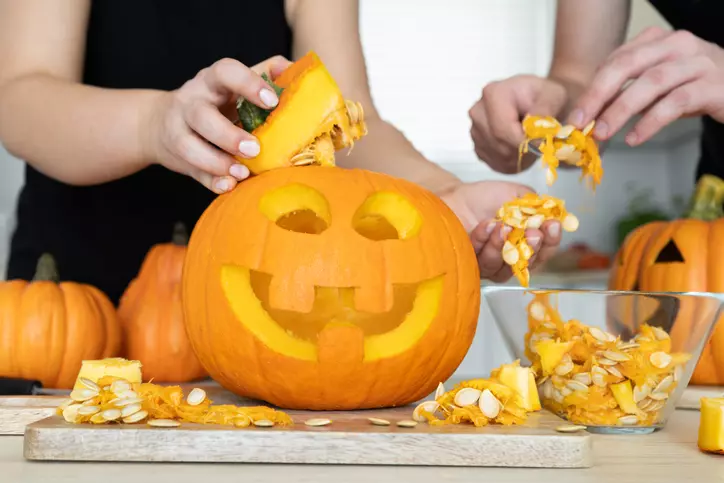
Wondering what to do with all of the guts of the pumpkin you are carving for Halloween? Before you throw away the insides, take a second look. The pumpkin seeds can become a crunchy snack or topping, while the pumpkin flesh can be used in sweet and savory dishes throughout the fall season.
Pumpkin pie may be the first recipe that comes to mind, but it is far from the only option. Pumpkin puree can add flavor and texture to pumpkin chili, pumpkin soup, pumpkin pancakes, muffins, smoothies, custard, cheesecake bars, and even pumpkin-spiced coffee.
Start With the Pumpkin Seeds
Dietitian Leah Kleinschrodt offers a simple reminder for your pumpkin seeds: “Don’t throw them in the garbage. They actually have a nice source of magnesium in there.”
When you scoop out the inside of a pumpkin, save the seeds before discarding the rest. Pumpkin seeds are a good source of magnesium and zinc. They are also a great source of phytosterols, which are plant compounds that may help to lower blood cholesterol.
Before you carve the face of your Halloween pumpkin, wash the outside under cool running water. This helps prevent dirt and bacteria on the rind from being transferred to the inside when you cut it.
Cut the opening for your jack-o’-lantern and scoop the pumpkin seeds, fibrous strands, and loose pulp into a clean bowl. Separate the seeds and set them aside for roasting.
Clean and Roast the Seeds
Fresh pumpkin seeds come out sticky and tangled up with stringy pulp, so plan on a quick soak-and-swish before they go near the oven.
-
Fill a large bowl of water and drop in the seeds
-
Swish everything around with your hands or a spoon. The seeds will float to the top and any pulp will sink, making them easy to separate.
-
Scoop the floating seeds into a colander and give them one more rinse.
-
Spread the seeds on a clean paper towel and pat dry. Note: if you have a little leftover pulp hanging on, that's fine, it will dry out in the oven.
-
Toss the seeds with a little olive oil and sea salt.
-
Bake until crisp. We recommend trying 20-30 minutes at 350F stirring halfway through. Put them in a single layer and stir them once, about half way through.
Seasoning Ideas:
Swap or add some of these seasoning for new flavors or flavor combos:
-
Garlic powder
-
Cumin
-
Chili Powder
-
Cinnamon
-
Apple Pie Spice
Storage:
Store your roasted seeds in an airtight container at room temp for about a week, or in the fridge for up to two weeks for a longer shelf life.
Freezing:
Spread the roasted seeds in a single layer on a baking sheet, freeze until hard, then transfer the frozen seeds to an airtight container for up to 6 months.
Eat them as a delicious snack, add them to a salad, or use them to bring a little crunch to a warm bowl of soup.
Make a Homemade Pumpkin Puree With the Flesh
A carving pumpkin isn't the same as a baking pumpkin. This method will make a small amount of homemade pumpkin purée, not the several cups you would get by roasting the entire pumpkin. It is a practical way to use more of the clean leftover pumpkin insides while keeping the shell intact for carving.
-
Place the remaining pulp and fibrous strands in a steamer basket and steam them until very soft.
-
You can also bake the insides in the oven at 375 degrees until very soft.
-
Transfer the softened pumpkin to a food processor or blender and blend until smooth.
-
Because a Halloween carving pumpkin can be watery and stringy, press the purée through a fine-mesh strainer or let it drain briefly before adding it to a recipe.
Straining tips:
Cheesecloth or a coffee filter over your strainer might be better than a mesh strainer by itself if your puree is very watery.
Tips for Using Carving Pumpkins
-
The purée may be thinner and milder than canned pumpkin, pumpkin soup and pumpkin chili are especially natural uses.
-
For muffins, custard, pancakes, or other baked pumpkin recipes, drain the purée well first or stick with canned pumpkin.
-
Important to note that carving pumpkins aren't bred for flavor. Some are just for the size and shell strength and not their taste.
-
Bigger and older carving pumpkins tend to be more fibrous and bland. If you have a choice of pumpkins to carve, a smaller, fresher one will generally give you a better-tasting puree.
Recipes to Try:
With a little extra effort, the inside of your carving pumpkin doesn't have to go to waste. Roast the seeds for a simple snack and a source of magnesium and zinc, and turn the pulp into a small batch of puree for a soup or chili where its milder flavor and thinner texture add delicious flavor and nutrients.
Share This Article