Headache Relief-Decoding Your Food Triggers
November 3, 2025
Are your headaches trying to tell you something? Dietitians Melanie Beasley and Britni Vincent unpack the surprising food and lifestyle triggers behind those frustrating headaches and migraines. Learn how blood sugar swings, dehydration, caffeine, histamine-rich foods, and additives like MSG or aspartame can set them off, and how balanced, real-food meals can bring relief.
Listen below, or subscribe to our podcasts through Apple Podcast or Spotify.
Join our Dishing Up Nutrition Facebook Community!
A private, supportive space to ask questions, share ideas, and get bonus content from our nutrition team.
Similar Podcast Episodes:
Transcript:
Melanie: Welcome to Dishing Up Nutrition, brought to you by Nutritional Weight & Wellness. Today we're talking about something and a lot of people struggle with, but don't often connect to their diet, and that's headaches. Especially those mysterious ones that seem to come out of nowhere. A lot of times it is not so easy to connect the dots to what's causing your headache. In fact, Britni and I were just talking about how it's almost like a Rubik's cube.
Britni: Yes it is.
Melanie: Trying to figure out what's the culprit and what's the combo? So today we're breaking down really the most common food triggers, explaining why they create headaches and what you can do to finally get some relief. And before we get on any further of today's show, I'm Melanie Beasley. I'm a Registered and Licensed Dietitian.
Britni: And I am Britni Vincent. I am also a Registered and Licensed Dietitian. And you mentioned combo. So I find that to be true with almost everybody. It's not just one single trigger. It's like people have a tendency towards headaches or migraines. And it's often can be multiple factors that that end up triggering them.
Melanie: Which is really, really frustrating.
Britni: Its so frustrating.
Melanie: Because you might try one thing. But if you tried one thing and then two other things that could be the magic. And so that is where you need someone to come alongside you. And figure out what's the perfect stack to give, get you some relief.
Britni: Yeah. And we are here to just do that and it, I mean, it's, can be a little bit of trial and error, but we have our questions to kind of figure out. What might be at the root, cause it is so variable from person to person, but let's start by saying this: headaches, you know, they're generally not just random, even though you might feel like they're completely random. There is a message from your body or a signal that something's causing inflammation and that results in a headache.
Melanie: It's not really that different from other pain. When you have pain, it's your body's flare gun, right? Something is wrong.
Common foods as common culprits of headaches: man made & ultra processed
Britni: I like that. So, you know, certain foods are known to be common culprits of headaches, especially those containing ingredients that are manmade or ultra processed. Real food is rarer to cause headaches unless you have a specific sensitivity, but it's also how you eat your food and eating patterns that can make a difference.
Balance blood sugar for headache relief
If you are a long-time Dishing Up Nutrition listener, you know that one of our main foundations of healthy eating is to eat for balanced blood sugar. And one of the most common reasons people get frequent headaches is unstable blood sugar. So when we skip a meal or eat a high carbohydrate meal, say a sweetened latte and a bagel for breakfast, our blood sugar spikes and then crashes later on.
Which can lead to constricted blood vessels in that familiar tension or even throbbing pain in your head. Or it's just going too long without eating. I know for me, this is one of my triggers. But when I was younger, I did not put those pieces together.
Melanie: You're busy moving and shaking in life. And that's one of my triggers too. If my blood sugar drops too low, I go too long without eating. Boom, there it is. And this is because our brain relies almost entirely on glucose or sugar for energy. So when you have a low blood sugar that can trigger a headache, lightheadedness, irritability, difficulty concentrating, you know, and brain fog. It is difficult to think a straight thought when you're not fueling your brain.
Britni: So true.
Melanie: So this is what we call reactive hypoglycemia when the brain doesn't get enough glucose for fuel. And this energy shortage makes nerve cells work less efficiently. Essentially your brain is signaling that it's under stress from the lack of glucose. So we always want to have that nice balance of eating good real food with, starts with protein and vegetables and that will help with your glucose balance, but not too much carbohydrate because then it creates that surge and then the plummet of blood sugar.
Britni: You know, this is a big reason why we always want to make sure you're including protein and healthy fats with every single meal to balance your blood sugar so that it doesn't go too high or it doesn't go too low. So something as simple as a couple of eggs. Maybe you add some of our turkey sausage. We have a great recipe on our website, weightandwellness.com, or a lot of people are adding cottage cheese to their eggs to bump up the protein.
You know, you cook that in a little bit of butter. Maybe a small apple on the side or throw some veggies in there and then, you know, sometimes that afternoon time can be tricky. That long period between lunch and dinner.
Melanie: I see that with teachers.
Britni: Yes.
Melanie: Sometimes they're eating lunch at 11 and then they're staying afterwards for conferences.
Britni: Yeah.
Melanie: And they're not eating dinner till six or seven. That's a long stretch.
Britni: It's a long time. And that is one thing I will ask my clients when they come in with headaches or migraines, are there particular times of days that you are more likely to get one? Because that can kind of point in the direction of what the causes are. So if it is often mid-afternoon, maybe you just need to add a snack in the mix.
Melanie: Yeah. Great. Follow the lead, right?
Britni: A snack could be, you know, nitrate free deli meat. Put some mayonnaise or cream cheese or avocado in there, throw a pickle, throw a cucumber, wrap it up. Super simple on the go snack, but adding that may help to prevent a headache or a migraine in the afternoon. Also, you know, along with this, as you can tell, you want to make sure you're eating frequently enough. So for most people, that ends up being, you know, three to four-ish hours.
B vitamins can help reduce migraines
Melanie: It's good, you know, and when I think of eggs for breakfast, I also think of another great health benefit. Eggs are high in B vitamins, and here's an interesting fact. Did you know that B vitamins can help reduce migraines, specifically B2 or riboflavin, and is sometimes used in high doses to combat the severity and frequency of migraines?
I sometimes recommend 400 milligrams of riboflavin because it plays an important role in energy production inside the mitochondria in the brain. And it's thought that there may be mitochondrial dysfunction in the brains of people who experience migraines. So riboflavin can help regulate this imbalance.
And like I said, some studies show that a very high dose of 400 milligrams per day help prevent migraines. So that's part of a stack that we'll be talking about. And I like to suggest a good multivitamin. Nutrikey has one called Twice Per Day as a start, and it's a blend of all the B vitamins in the methylated form. So they're more readily used by the body, but then you additionally will need to supplement that riboflavin, that B2 to meet that 400 milligrams.
Magnesium can be very helpful for headaches
Britni: You know, there's another key supplement I want to be sure to mention while we're on this topic. For anybody that walks into my office complaining of irritating headaches, I will typically recommend supplementing with magnesium, specifically Magnesium Glycinate. So the Magnesium Glycinate can be helpful. I have one client that this one simple thing; I wish it was this simple for everybody.
Melanie: Yes.
Britni: But regularly supplementing with magnesium. And, of course she was modifying her food as well, but it made a world of difference at preventing her headaches. And so, if you're, especially somebody that carries a lot of muscle tension in your shoulders, your neck, magnesium helps to relax your muscles.
So it can help to, I think, prevent some of those headaches triggered by that. And a lot of the research says about 400 milligrams of that glycinate. You could even try taking it when you feel a headache coming on too. And for some individuals that can be helpful.
Melanie: I know that there's been some research. I haven't used it enough to really see benefit, but there's a form called Magnesium Threonate that goes across the blood brain barrier. But again, I haven't really found it to be as beneficial as the Magnesium Glycinate.
Foods that commonly causes of headaches (ultra processed foods, artificial sweeteners, nitrates, MSG, food dyes)
Now let's get into the foods that are common culprits of causing headaches. And certain foods can directly spark headaches for sensitive people, like we mentioned. Most of these come from ultra processed foods. Big surprise. Common headache triggers are in ingredients like artificial sweeteners. I'm thinking aspartame, sucralose, and sometimes even natural sweeteners if you have an allergy to stevia in concentrated forms can cause headaches.
Another common ingredient is nitrates in processed meats and aged foods like cured meats and hard cheeses, and those foods can dilate or constrict blood vessels and disrupt neurotransmitters and trigger inflammation. And then also what comes along with ultra processed foods is MSG, and oh my goodness, there's so many terms on the labels for MSG.
Britni: Yes.
Melanie: Natural flavorings, which could mean MSG and might not mean MSG; yeast extract can be a trigger.
Britni: Yeah.
Melanie: So I would say when you are picking one ingredient foods. You don't have to worry about what they're putting in there to make it taste good. But I would avoid yeast extract and monosodium glutamate.
Britni: Yep.
Melanie: Nitrates, nitrites. And you're going to find these in ultra processed foods.
Britni: In a lot of foods.
Melanie: Yes. Some people are really sensitive to food dyes and food colors and caramel color.
Britni: So basically your safest just eating real food.
Melanie: Yep. One ingredient food.
Aged & fermented foods can trigger headaches/migraines for some
Britni: Yep. Well, let's talk about aged and fermented food. So these include foods like hard cheeses, cured meat, soy sauce, fermented foods like kimchi and sauerkraut, even certain alcohols like red wine. So for some people, these foods can trigger a headache or even a full-blown migraine, and this is because they contain compounds called tyramine and histamine, which can affect blood vessel dilation in the brain. Tyramine comes from the the amino acid, tyrosine, and histamine comes from the amino acid histidine.
Melanie: Not that you have to memorize this. There will be no test on this. But for some of our really science, science people, I think it's nice to know, you know how this, the why, how this works and what's the why.
Britni: So both of these amino acids are naturally found in protein rich foods. So these foods themselves are not a bad thing, it's just the tricky part is tyramine and histamine levels go up as foods age or ferment. So the older that parmesan or that prosciutto is for example, the more likely it is to cause problems if this is one of your triggers.
Melanie: And you know right now what's trending is all the ferments. The highly fermented aged foods, and we talked about this when we were talking about histamine intolerance in our, in our podcast, but when it makes sense, 'cause you said as they age. So it may not necessarily be protein foods.
It could be the sauerkraut or the bone broth. Or the kombucha. Those are actually high histamine, high tyramine foods, which can be a trigger. So if you find that you've folded in some of these high fermentable foods and you just don't feel good and you're having more migraines, that could be the culprit.
Britni: Absolutely. Yeah. So you know, if you have figured out that this is part of the issue for you and you're avoiding aged cheeses, maybe you opt for fresh mozzarella or ricotta, for example. Or choose fresh meats instead of cured. In general, you know, to avoid the histamine and the high tyramine foods, you're eating foods as fresh as possible. And that histamine podcast that Melanie and I did, that was just earlier in October. So if you missed that one, that would be a good kind of pairing to this episode.
Melanie: If you go to our website and you click on podcast, you'll scroll down and you'll see it. There's a woman holding her head. So that's the picture that you're going to find on our website for histamine intolerance; we just, it was just last month in October, Britni and I did that full Dishing Up Nutrition deep dive on histamine intolerance.
You know, you can give it a listen and see if it resonates with you. I know for me, that's a trigger for headaches for me. So, I typically don't eat high histamine foods so similarly, nitrates and nitrites in processed meats can dilate blood vessels, and if you're getting headaches and regularly eating processed meats like jerky, bacon, sausage, pepperoni, and other processed meats that don't state no added nitrates, try eliminating those and focusing on fresh meats for your protein. Because even though they may be nitrate free, that doesn't mean they're low histamine.
Britni: Yes.
Melanie: So sometimes if it's a histamine issue, you don't want any deli meat. If it's a nitrate issue, you can have deli meat, but you want to avoid the nitrates. And that might be confusing, which is why we're here for you. Just avoiding those and seeing with elimination how you're feeling, and if that's contributing to your headaches.
Britni: Yeah. Ultimately, I mean, the easiest way to figure out if these particular foods are an issue, you just eliminate them. You see if you feel better, and then if you end up reintroducing them, you'll have your answer.
Melanie: And I would say a good two to four weeks is the elimination to bring all the inflammation down and then you can challenge those foods that you miss and see if they trigger a headache. And a challenge would be having it a couple times a day.
More on aspartame in triggering headaches
Britni: Yep. You know, another one that I have had many, many clients that this is a trigger is diet soda.
Melanie: Oh yes.
Britni: Do you get a headache after that? So it could be an issue with aspartame, and it's not just diet soda nowadays; aspartame is found in a lot of different things. Like, you know, there are so many different flavored beverages out there nowadays: electrolyte powders, even protein powders.
All of those things may contain aspartame, so when aspartame breaks down, it forms aspartate, which can act as an excitatory neurotransmitter in the brain. So you may have heard the term excitotoxin. Basically, this means these ingredients overstimulate the neurons in your brain leading to headaches. So many diet drinks with aspartame are also going to contain caffeine, which can cause mild dehydration.
Dehydration can be a trigger
Dehydration being a big trigger for people. So the caffeine plus the aspartame can cause just double the risk for a headache for some people and people who are super sensitive, excess excitatory activity called excitotoxicity may trigger nerve over stimulation and pain signaling, similar to the mechanism seen in migraines.
Also be mindful of natural sweetener, stevia, for some
So even the more natural sweeteners like stevia, those have the potential to cause migraines for some as well. And stevia, you're going to find that in all sorts of products as well. So you really, you need to read the ingredient list of every food that you're putting in your mouth. And you, you know, you might have very good intentions switching from diet soda or regular soda to maybe a stevia sweetened soda, but find yourself getting headaches. And so that could be the cause.
Melanie: So if you're somebody who likes to use stevia, you can always switch over to a monk fruit product. And see, you still get the sweetness. You're not getting the sugar hit, but you might have some relief.
Britni: Well, it is time for us to take our break. You are listening to Dishing Up Nutrition and we will be right back.
-----
Welcome back to Dishing Up Nutrition. Melanie and I are here talking about headaches and migraines and some common triggers and how you can unravel this puzzle. And before break we were talking about common additives in foods that can be triggers, but what else are some common triggers?
More on the dehydration connection to headaches
Melanie: Well, you know, as you mentioned earlier, dehydration is another sneaky headache trigger and, and you can get so busy and realize I haven't drank anything all day, and then suddenly you feel a headache coming on. Well, even mild dehydration could cause your brain to temporarily shrink from fluid loss, leading to pain, and you may notice that you feel a headache coming on right away, or it may be very insidious and, and start. A simple solution is just drink more water.
But many people find drinking enough water challenging. They forget to drink water. So what I tell people is get a water bottle you love. Have one at work, have one at home. Put the number of rubber bands at the top that you need to fill that water bottle and consume it to get half your body weight in ounces of water. That's how you hydrate appropriately.
Britni: Mn-hmm. And spread that out throughout the day. Because if you chug 20 ounces of water in one sitting, you're not absorbing all of that.
Melanie: You’re not absorbing. That's a really good point. So, you know, maybe every hour you're going to get a cup, a cup to 10 ounces in, sip, sip, sip all day long. And, that's, that can be really helpful. For everything, not just headaches.
Britni: Oh, absolutely. And I, it's such a basic thing, but so many, I would say at least half of my clients are just chronically dehydrated.
Melanie: Oh, for sure.
Britni: Because you forget it's out of sight, out of mind. So get that water in. Another thing that could be helpful and I have found very helpful is electrolytes, adding those in.
Melanie: Mm-hmm.
Britni: So, you can do this preventatively. You can also, if you feel a headache coming on, right away start to drink some electrolytes and that can be very helpful. So what you would, if you find yourself sensitive to stevia, like we were just talking about, you're going to want to look for an unflavored one.
If you do not react to stevia, you're basically just looking at ingredients and avoiding added sugar. You're avoiding the aspartame, the sucralose. There's artificial sweeteners in there. Coconut water has naturally occurring electrolytes in it. Now it does have naturally occurring sugar, so you don't want to drink a ton of it, but, that could be something that is helpful as well. It, you know, putting a pinch of salt in your water as well. Essentially this is going to help to hydrate your cells and therefore hydrate your body more efficiently.
Melanie: And you're going to get a little bit more trace minerals if you're doing something like a gray Celtic salt. Or Celtic salt is going to have a little bit more minerals than just table salt.
Take caution with caffeine
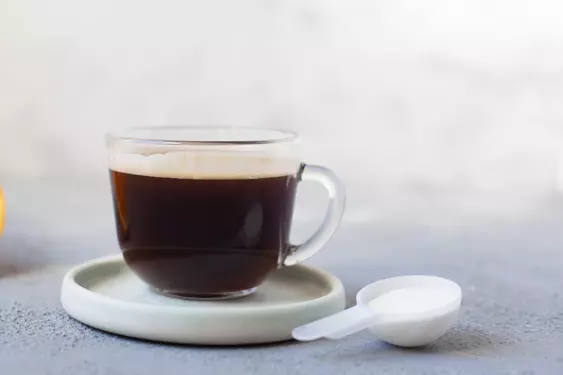
Britni: So similarly, another common trigger for morning headaches is caffeine withdrawal. So caffeine is a double-edged sword because it's actually used in a lot of migraine medications because it constricts blood vessels, which can stop a headache in its tracks. But when you consume high levels of caffeine every day and then you skip it, or just don't have as much, that can cause your brain to rebound.
So those blood vessels dilate again, causing a withdrawal headache. So I recommend sticking to one or two cups a day, being consistent, or you know, no more than 16 ounces of regular coffee or two shots of espresso, and that amount isn't, it isn’t likely that it's enough to create dependency that causes these types of withdrawal symptoms?
Melanie: I think it depends on the individual. If I was having one cup of coffee a day, I'm that girl. I'm addicted. So I try to save that caffeine for when I feel a headache coming on. And I can't figure out why. And then I might have a green tea. And it's enough caffeine to have that vasoconstriction that helps with the headache because my body's not acclimated.
Britni: Yeah.
Melanie: But everyone, everyone's so different.
Britni: It is, yeah. All of this is just so individual. So if you are somebody that does get a withdrawal headache, if you don't get enough caffeine, you know it's best to reduce the amount of caffeine that you're intaking. And some people just do better with no caffeine as well.
Melanie: But you want to do it slowly. So that you don't want to come and poke us in the eye with the headache.
Britni: Taper down slow.
Melanie: Taper down slow. And you know, fluctuating a lot with caffeine, that can cause headaches from either too much or too little. And then of course if you're getting a lot of caffeine, you're probably dehydrated too. So you have to be careful with chocolate as well, because that also contains a small amount of caffeine. And I don't think a lot of people think of that.
Melanie: Sometimes too, they're drinking certain beverages that are “for energy”. And that's a caffeine source. So you have to be a detective.
Britni: You do.
Alcohol can be a headache trigger
Melanie: Unless it's a single ingredient food. Similar to coffee is alcohol can be a big headache trigger, especially aged alcohols like red wine, champagne, beer, aged, dark liquors, brandy. You may have had an experience where you took a sip of red wine or champagne and almost immediately felt a headache.
Alcohol causes blood vessels to expand. In some cases it can be high in histamine as well, and it dehydrates you. So there's a triple hit for migraine and headache prone people, and wine contains sulfites, which can also be a trigger for headaches. So if you suffer from headaches, the best option, abstain from alcohol for a while.
Just go on your headache, you know, a little headache can trigger fast, and then you can add one thing at a time and see what your threshold of tolerance is. But no alcohol is always the best option.
Gluten is inflammation-causing for many individuals
Britni: All right. I want to touch on gluten as well. Because for those with celiac disease or non-celiac gluten sensitivity, gluten causes inflammation systemically throughout the whole body. So with one common symptom being headaches, so many people with untreated celiac disease or undiagnosed gluten sensitivity, they do report frequent headaches and notice their symptoms improve pretty rapidly when they just take it out and they eat gluten free.
But as many of these diet related headaches, it's not always obvious. If you are eating a food on a regular basis, you are probably not going to figure it out that that is the trigger. Like we talked about earlier, the best idea is you just pull it out.
Melanie: A hundred percent.
Britni: A hundred percent.
Melanie: You can't go less gluten, right?
Britni: Yes. Even that one piece of toast a week, that could be enough to trigger a migraine for you.
Melanie: And it may not be instantaneously.
Britni: Yes, exactly.
Melanie: It might be the next day. Or even two days, three days later. So it just muddies the water when you're trying to figure it out.
Britni: Yep, it, it does. So, you know, when I am working with somebody who has unexplained headaches, this is often a common recommendation that I have. So we plan out a hundred percent gluten-free diet along with, you know, some of these other common culprits that we've talked about, and you do this for, like you said earlier, two to four weeks. And the beauty of it is if you're eating real food, well that eliminates basically all gluten anyway.
Melanie: That's so true. There's no gluten in meat, fish, nuts, seeds.
Britni: Veggies, fruit.
Melanie: So healthy fats.
Britni: Yeah.
Melanie: So if you're eating real food, you're automatically; I have so many clients that will say, I just felt better when I did Whole30.
Britni: Yes, I've heard that so many times too.
Melanie: Which eliminates, when you're eating, you know, Whole30, it eliminates gluten, it eliminates sugar, blood sugar balance issues.
Hormone fluctuations in women can contribute to headaches
Britni: Dairy. You know, another big cause for headaches and migraines in women, specifically are hormone fluctuations. Generally these women have estrogen dominance, so if you are, tend to get headaches or migraines around ovulation, the week leading up to your period, sometimes it's the period, your period itself. If that is consistent, month to month hormones are going to be a big, big cause.
Melanie: So it's great to track it.
Britni: Yes, it's such a good idea. Track your cycle: the length of your cycle, when you're getting your period, when you're getting your headaches or migraines, and we're, you know, we don't have time to dive deep into this, this part of it today, but just know, like, I have helped so many women get rid of these type of headaches and I know you have too.
Melanie: Yeah.
Britni: So we have a lot of solutions for this if you're resonating with it.
Melanie: And I wish I would've known this when I was younger in my very early thirties. I had headaches with every cycle. And my daughter, who was maybe eight years old, six years old, she sewed me a headache pillow.
Britni: So sweet.
Melanie: I ended up having a hysterectomy because those headaches were so problematic. I would have it the week before my cycle and I had to have the week of ovulation. And they're debilitating. You're trying to raise small children.
Britni: Yeah. It's awful.
Melanie: I wish I knew what I knew today to mitigate some of those with some of the tools that we have now. But that wasn't in the cards.
How to eat to be headache free
So, and we've talked a lot about, you know, what might be triggering your headaches, but now you might be thinking okay. What do I eat? Let's talk about the foods to eat and give some examples about how to be headache free. And as we mentioned earlier, eating in balance is key, and that's with a good source of animal protein, a good source of vegetables with fiber, some fruit, some healthy fats, nuts, seeds, nut butters, butter, olive oil.
We want that nice steady blood sugar to provide fuel for the brain and also their body. It's not like you're not nourishing the rest of your body. Which also helps bring inflammation down. And it looks like fresh animal proteins, like eggs or poultry, grass fed meats, turkey sausage that you, you've sourced or made from our website, wild caught fish.
And you want to do this every time you're eating. You know that wild caught fish provides great sources of omega-threes that we can absorb, which reduce inflammation. So it's not a bad idea. You can supplement with omega-threes to bring down inflammation further with a good source of omega-3 fish oil.
Britni: Then we want most of our carbohydrates coming from those non-starchy vegetables. So, broccoli, lettuce, bell peppers, those types of vegetables are going to provide that fiber to help balance your blood sugar, give you carbohydrates to give your brain glucose for energy, but not spike your blood sugar too high.
Adding some healthy fat every time you eat, that's going to anchor your blood sugar, that's going to slow down absorption and help to prevent those increases and those crashes.
Melanie: And then plenty of water. Plenty of water.
Britni: Yes. And we touched on this earlier, but when you're working with clients figuring out headache triggers, I do recommend a log. I've done this myself. You write down everything you're eating, you know you're doing, you're drinking, you're writing down your headaches. The time of day you're getting your headaches and it really just helps to piece it all together. And if you do end up making an appointment with one of us, it's so helpful for us to see that.
Melanie: So bring it in. Please bring it in.
Tips for when a headache hits
Britni: Yes. And that, I mean, that can very easily reveal some patterns just doing that. So in the meantime, if and when a headache hits, you can try these quick tips. Have a protein rich snack, drink a big glass of water with a pinch of sea salt, or have those electrolytes. Step outside if you can. A bit of natural light and gentle movement, that's going to improve your circulation. And the reality is staring at screens for too long can be a common trigger. It's definitely not helping things.
Melanie: Yeah. If you have to, it's your job, you can always get the blue light blocking glasses. You know, headaches don't have to be part of your normal routine. It's not something that's really, that’s genetically handed down. Just because your parents had headaches doesn't mean this is your destiny. By tuning into how your, that food affects your body, you can find lasting relief and no more guesswork.
Sometimes some key supplements may be important. There's a whole stack, you know, that's been shown to be very helpful. But first we start with food. And if this episode resonated with you, we invite you to come to see us. We want to help you. Headache relief is possible.
Visit our website at weightandwellness.com or give our office a call at (651) 699-3438 and please share this episode with anyone you know who is struggling and tired of powering through those headaches.
Check Out Our Website for More Information!
Remember, small, consistent real food changes can make a world of difference in how you feel every single day. If you feel overwhelmed, start small. Usually there's something that resonates with you as you're listening. That's the first place you should start.
Britni: Yeah.
Melanie: Thank you for listening and have a great day.
Britni: Thank you.
Share this Podcast
Upcoming Podcast Episodes:
September 14: Curb Cravings the Natural GLP-1 Way
September 21: Nutrition for Colon Cancer Recovery
September 28: Why Sugar Might Make You Sick Longer