A Happy, Healthy Thanksgiving – With Guest Chef Marianne
November 17, 2025
Enjoy your Thanksgiving dinner and feel good afterward. In this episode of Dishing Up Nutrition, dietitian Leah Kleinschrodt and our resident chef Marianne Jurayj walk you through how to build a delicious, real-food Thanksgiving -- from a balanced plate strategy to upgraded sides, smarter potatoes, veggie-packed salads, better-for-you desserts, and even what to do with the turkey so it actually turns out juicy and flavorful. You’ll hear practical ideas for gluten- and dairy-free guests, simple make-ahead breakfasts, and festive drinks without the sugar crash.
Listen below, or subscribe to our podcasts through Apple Podcast or Spotify.
Join our Dishing Up Nutrition Facebook Community!
A private, supportive space to ask questions, share ideas, and get bonus content from our nutrition team.
Similar Podcast Episodes:
- Talking Turkey, Farming & Recipes with Guest Ferndale Market
- Tips To Manage Health During The Holidays
Similar Articles:
Transcript:
Leah: Welcome to Dishing Up Nutrition, brought to you by Nutritional Weight & Wellness. I'm Leah Kleinschrodt, a Registered and Licensed Dietitian, and joining me today is special guest, our resident chef, Marianne Jurayj, here to share tips of how to enjoy the upcoming Thanksgiving holiday with peace of mind and confidence that you'll be feeding your body well and a little can-do adventurous spirit to go along with it.
We want to be able to enjoy the Thanksgiving meal to the fullest without some of those feelings of regret afterwards like we've overindulged. And so many of us truly want to make our Thanksgiving dishes healthy and balanced, but we worry that it won't turn out as well as those traditional recipes, or it won't be approved by our families.
Sometimes when we think about those healthy alternatives to your favorite traditional holiday dishes, it can sound kind of unexciting or even disappointing, or maybe like you're kind of zapping the holiday cheer out of that dish or that meal. But Chef Marianne is here to show how healthy recipes can be anything but bland and boring.
She is an expert at creating dishes that are real whole foods based, yet don't compromise on flavor. So today we'll be sharing our favorite twists on classic dishes from the beautiful sides that impress your family to the desserts that satisfy without overloading on sugar. So, welcome Chef Marianne. It's good to see you again, and I'm excited for you to be here with us, share your expertise, and just have a great conversation today.
Marianne: Yeah, absolutely. Thanks. My pleasure to be here chatting about food. Love to chat about food. And I love this is, I'm, I'm going to say this is my favorite holiday. And I'll tell you why. Obviously for the food, the family, but there's no pressure of gifts. It's just all about the food and family and I love that. I'm also fortunate enough to have two grown children who also love to cook.
Leah: Perfect.
Marianne: So for me, Thanksgiving is two days of spending time in the kitchen with my family, my kids, and we, my daughter makes a little reel, a little, you know, it's just, it's a, it's a very fun holiday. So I absolutely love it. And hopefully today we will inspire everyone to add a little healthy twist without taking away that tradition that everybody feels really attached to I think, you know?
Leah: Mm-hmm. Yeah. Yeah, absolutely. It sounds like for you guys, connection is a big theme for Thanksgiving, and that's something that you love and thrive on and have cultivated over the years, especially with the family, with the kiddos and stuff like that.
Introducing the idea of healthy alternatives to traditional Thanksgiving foods
Marianne: Yeah, and we want it to be flavorful. So let me say, I feel like Thanksgiving traditions, and I'm going to put that in quotations, because it's different for everyone. But I will say that there is a theme with Thanksgiving, certainly with older folks, they are thinking about, I call it the marketed Thanksgiving.
So post World War II, you had all these products that became these church basement recipes. Your Jello, your soup. Your cream of mushroom soup, your flour, you know, your Gold Medal flour, all that. They became the traditions and people sort of settled on those foods and they became what everybody ate for Thanksgiving.
And so now, not to say that we have to get rid of all of them at once, but I think if we want to turn this into a healthier, more enjoyable meal, we can do it incrementally. You don't have to change the whole thing all at once. It can be, maybe you change a little something this year and then next year and next thing you know, you've started a whole new tradition.
Leah: Mm-hmm. And you never know if the new tradition or whatever you're tweaking or improving on this time is actually liked better by everyone versus the old way. So like give yourself that chance too, I would say of like actually what you might try on for size this year might go over fantastically. And this is the new tradition. This is the new opportunity to make it, to like be aligned with the goals of healthier eating, balanced eating and things like that.
Marianne: Yeah, I agree. I'm going to tell you an example; the, the green bean casserole that I know everyone loves and I know Nutritional Weight & Wellness has a great sort of healthy alternative on the website for that recipe.
Leah: Yep.
Marianne: But I actually switched that out for shaved Brussels sprouts cooked with bacon.
Leah: Yes.
Marianne: And it's requested every year now. Everybody loves it. Brussels sprouts are in season. It's so fantastic.
Leah: Yeah, that's a great example of like a, just a simple upgrade, a simple tweak. You're not reworking a whole recipe, but it actually became a new favorite and now it's requested. With our Thanksgiving, I want to give maybe a little bit of background just for myself in terms of how I approach that Thanksgiving meal and kind of the Thanksgiving weekend in general. You know, I've been kind of practicing more of that real food balanced eating for well over a decade now at this point, and I think I've kind of honed in what I want to get out of that experience with that holiday meal.
I love that term honing. You use that a lot, Marianne, so I probably borrowed it from you. For me, I did have to make a mind shift. And for me, the way I frame it, at least in my mind is like, I want to eat that meal in a way that helps me feel my best or feel good after the meal is done. I want to be able to go outside and play with my kids.
So like that was a big evolution there. I want to, I don't want to feel sluggish or like I'm couch bound for the rest of the day. I want to be able to easily get up and because my kids are tugging at my heels or at my sleeve and stuff like that, they're ready to go outside.
They're ready to burn off that energy. I want to be out there with them, and I don't want to wreck my digestive tract for the next two to three days also. So that's always in the back of my mind of when I'm eating at a holiday meal or eating out or like we have some of these special occasions, I want to make sure that I'm eating in a way that's going to leave me feeling good after that meal.
I've definitely had those holiday meals where I feel stuffed to the point where it's painful, and it takes trial and error, unfortunately in that sense, but to me, eventually that became just not worth it anymore.
Marianne: Yeah, I totally agree. Think about how sleepy you get after that, you eat that big meal and now you're ready to just plop down on the couch and do nothing when, you know, get up and take a walk, and like you said, you've got your kids, they want to do something, they've got energy. They're expecting mom to, you know, keep up with them and go out, maybe go out and play touch football or whatever, you know? All of that stuff.
Leah: Yep. Yeah. They're ready to go. I want to be ready to go with them so like I, in the back of my mind I'm like, okay, what am I going to eat that I still can participate in the meal, be part of the group, still have that connection like you were talking about Marianne, and still walk away from that experience like feeling fulfilled but not, overly stuffed, full or feeling, yeah, sluggish on the couch; that type of experience.
Tips on how to start the day (eat a balanced breakfast)
So let's actually pause on the actual meal, because like actually what gives us some good leverage to make good decisions around that holiday meal is how do we start the day to begin with? How do we start that actual Thanksgiving day? We want to start at a normal workday for a lot of people, or just like a normal day, we don't want to get to that Thanksgiving lunch having skipped through breakfast.
You're running on fumes. Maybe you've got the coffee fumes on board too. So maybe you got a little like anxiety or jitteriness along with it. We don't want to get to dinner having only maybe snacked or grazed little bits throughout the day. Like by then, the pendulum has swung too far to one side where now we get to that meal overly hungry.
We're ravenous or our bodies are calling for nourishment at that time. So what happens then is then the pendulum swings the other way. We overeat, we stuff ourselves. Then we feel that effects of tiredness, sluggishness, brain fog, sleepy. Probably some guilt or regret of like, oh, I can't believe I did that. That kind of thing.
So like, let's make sure that we start that day with Thanksgiving with a great balanced breakfast, get some protein in, work in some greens or some kind of vegetable in there. It sets you up to just have a much more balanced response throughout the rest of the day.
So I would just encourage people to think about that. Don't “save your calories” until you get to that meal. Like, let's make sure we start off balanced so that we can keep our wits about us then when it comes to the actual meal.
Marianne: Yeah, I agree. I feel like a lot of people think “I'm going to save my calories” so that I can justify eating, you know, X, Y, and Z and it really backfires. I mean, I think you come to the table, you're really hungry and you're going to load up that plate with the things that are going to make you feel sluggish and tired. And not be balanced.
And so, I'll tell you our little trick, because we spend a lot of time in the kitchen. We, we really, it's like two day cooking fast for me, which you can imagine is just, it's amazing for me because I absolutely love it. But I make egg bites and I have them frozen. And so I already, I am planning for that marathon of cooking.
So that we are set. The morning of Thanksgiving, we will all have something to eat. I like to do, I think, the website has some great little egg bite, or an egg bake, something like that. Having it ready, they freeze beautifully. So you don't have to think about it on that day. It's already done.
And it's good protein, balance. It just sets the day off so that you can have the energy to cook that meal and to have the brain space to make everything the way you want it to and time it out. You know, there's a little calculation. It's a strategy to get that day done it, especially if you're hosting.
Leah: Yeah.
Marianne: So yeah. Having a good balanced breakfast, not too much coffee.
Leah: Yeah, for sure. Yeah, the egg bites, the egg bake. Those are great ideas. Or even something, if it just needs to be like, scoop some yogurt into a bowl, put some berries on it, maybe a few nuts on there for crunch. Like something even super simple like that just to get you going out the door. Getting like getting your hands into the kitchen is a great way to start.
What does a balanced Thanksgiving plate look like?
So let's talk about that Thanksgiving plate again, and like what does a balanced plate look like? Really, it should look like a balanced meal almost any other day of the year. There just might be some of those, again, unique or special types of foods that show up a little bit more on Thanksgiving.
But I do think Thanksgiving is one of those meals, one of the easier meals out of the year or out of the holidays, where it's like you can strike a pretty good balance. So we want, you know, half that plate to be vegetables, some kind of vegetables.
This could be a festive salad. I love the Brussels sprouts idea. And so, I mean, you still could use green beans, but I love the Brussels sprouts idea too. This could be like roasted broccoli. This could be even off the veggie tray if there were some veggies sitting out. If in terms of appetizers, like grabbing the veggies off the veggie tray, filling that, filling your plate with that.
So half your plate ideally should be like some kind of greens or some kind of like colorful vegetable matter in there. About a quarter of your plate should be that animal protein. That's kind of the easy one there. The default for most people is turkey. I've had holiday meals where it's actually more like salmon or it is more, it's like a pork roast or something like that.
So whatever you choose to do, like get that protein in there, that animal protein, and then the other quarter of your plate is left for some of those starchy sides. So the potatoes, the sweet potatoes, the corn, the stuffing; you still get to enjoy those sides, just maybe a little bit more moderated portions than if you had a full plate left necessarily.
So these ways, you get that little bit of glucose into your system, but you still feel good afterwards. It's balanced out with some of the other components of the meal, and then you walk away not feeling overly stuffed or like you, you went a little bit too far. So Marianne like, why don't you take us through again, some other examples of like some great sides.
You mentioned that Brussels sprouts side dish that you guys love or that you created and or anything else that you have found or tweaked or played around with with the Thanksgiving meal?
Marianne: Yeah. Yeah, absolutely. So as you were talking about, filling that plate with vegetables; first of all, the, the, the tradition started at the end of the growing season. It is kind of a culmination of that cornucopia horn of all the food coming out of it; our farmer's markets have a lot of vegetables that are in season right now. So this is kind of a celebration of that. It's to be grateful for all of those things and the farmers that grow it.
So it's easy to fill that plate with some really good, beautiful vegetables. Your squashes are in season. Mm-hmm. Like I said, your Brussels sprouts, your cruciferous vegetables, your cauliflower, broccoli, you know, Bok Choy, I mean, we, you can go in a lot of different directions.
Leah: Yeah.
Marianne: But it's pretty easy to fill your plate with a lot of beautiful vegetables on Thanksgiving because there's so much that's in season. And I remember as a kid thinking, wow, Thanksgiving is very, the food is very soft. Like I thought that as a kid.
Leah: Oh, interesting.
Marianne: Mashed potatoes, mashed squash, the stuffing was kind of soft because the bread was, you know, and I, I always thought, boy, you know, Thanksgiving is a soft meal and it doesn't have to be that way. We can have the beautiful, bright, colorful salad. I usually, so first of all, when I'm, I happen to be a host. I know a lot of people are contributors to Thanksgiving.
Leah: That’s me.
Marianne: I happen to be a host family. So, like I said, my kids are cooking. And we serve our Thanksgiving buffet style. So lots of people, we can all fit at the, at the dining room table, but I put all the food out in the kitchen. We go through the buffet. So, so that's something to think about when you're a host, how you will serve your food. And it can sometimes dictate what dishes you have.
Leah: Definitely.
Marianne: And so anyway, I like to delegate to folks and so everybody, some people bring dishes, but I love to start the meal with a big, beautiful, crunchy salad. I put it at the beginning of the buffet. Because remember what you put at the beginning of your buffet is what's going to fill that plate.
Leah: Yep.
Marianne: So by the time you get to the stuff that might be, you know, a little starer, a little higher on the glycemic level. Put those at the end of the buffet. They have less space on your plate. It's a little trick that you can do. Restaurants do it all the time.
You go through a buffet, they're going to put the inexpensive starchy foods first. Because they want you to fill your plate with that. And so you're going to do the opposite of that. And fill it with the veggies, the salads, and then, your protein, and then finish with the starches at the end. That's my buffet trick.
Leah: Yes. I love that. And yeah, you think about that. We're just reverse engineering what typically the restaurants would do, where they're trying to fill you up more on those starchy sides, like spike that glucose, things like that. That's more of, again, the cheaper, the less expensive types of food. So now we're just reverse engineering that a little bit.
Marianne: Yeah.
Leah: I would say with me, so I am more the contributor. You're more the host. I'm the contributor. So we get both sides of the conversation here, which is great. So there's a recipe that comes with our Nutrition for Weight Loss Foundation series called Apple Cabbage Slaw.
Marianne: Oh yeah.
Leah: That's the one I love. So first of all, I love, people have heard me talk about this, but I make it for breakfast all the time. But this is the one that, when I get delegated, I usually get delegated the vegetable because give the dietitian the vegetables.
Marianne: Of course.
Leah: And so this is the one dish that I usually contribute just because it can make a ton. It's pretty simple to put together, but this one, I always get compliments on this particular salad. It is so good. People love it. There's that cabbage in there, like you said, like that fall, those cruciferous veggies that, that fall harvest. So the cabbage works really well at that point. And again, like that's one that continuously surprises me that people ask for that one or that it gets rave reviews every time.
Marianne: Well, and it has the sweetness from the apple, I suspect, which is also in season right now. Lots of beautiful, what's the dressing on that, do you remember?
Leah: So, the dressing, I keep mine a little more simple. I just use apple cider vinegar and a little canned coconut milk and avocado oil based mayonnaise, and I just like, kind of eyeball it and just make sure the whole thing is covered. I think the actual recipe calls for some lime juice in there also. If you can do some dairy, you can use sour cream instead of the canned coconut milk. But again, it's a simple dressing and you can kind of tweak it as you need to.
So there is a similar recipe to that one if there are people out there who haven't taken the Nutrition for Weight Loss series before. There's a similar recipe, I think it's called Cruciferous Salad. Something along those lines on our website. So same kind of idea.
Marianne: Yep. And I think that might have dried cranberry or something. Something in it that gives that little bit of sweetness. It dances on the tongue. It has either a vinegar or a citrus that makes it really bright.
Leah: Yep.
Marianne: Which also helps us digest our food. Having that little bit of acid to begin with. And having something crunchy, I think is, it takes away from my childhood soft food thing. I want crunchy things that on my, on my Thanksgiving plate, you know?
Leah: Exactly. And I could see like pomegranate seeds even being another kind of brightener in terms of color and flavor and stuff like that either going into that cabbage salad or that cruciferous salad. So yeah, so that's, I love that tip of like, just put those things out first.
Maybe some of our Minnesota passive aggressive way of saying like, here, eat these first and then load up your plate and by the time you get to the end, there's not a whole lot of room like, not as much room at least for the first pass through that we're loading up too much on those starchier sides.
Alright, well we do have to take a quick break. We will be back on the other side with Chef Marianne, and we'll continue talking about just some upgrades that we can make to Thanksgiving to elevate some of these traditional dishes. We'll be right back.
-----
We are back with Dishing Up Nutrition here with special guest Chef Marianne talking about leveling up some of those Thanksgiving dishes or changing up our offerings and some of those traditions in a delightful, tasty, wonderful way that still fosters connection and fosters that holiday season spirit.
Side dish & appetizer ideas
So I do want to continue that conversation just with some more ideas about, you know, side dishes, appetizers, that people can either bring or think about when they're hosting. I think we need to talk about potatoes at some point because that's a big star for like adults and kids alike. So actually, let's start there. Like what do you have to say about potato mashed potatoes, mashed sweet potatoes, anything along those lines?
Marianne: Yeah. Our, our soft foods, mashed potatoes, love them. I mean, and, and we don't actually eat them that often the rest of the year, but for sure it absolutely has to be on our Thanksgiving table. As I think many people would, would have that expectation.
Leah: Yeah.
Marianne: So one year I did, I snuck in, I took some riced cauliflower, and I really cooked that rice cauliflower, and I mashed it in with our mashed potatoes.
Leah: Yes.
Marianne: And dare I say, no one really even noticed they were in there. Now I, I like to add a lot of fresh rosemary and thyme to my potatoes. Potatoes are just sort of that neutral, I mean, and that may be part of what we love about them, but a fresh herb is such a great way to add just a little something.
So that's what I did. And no one was the wiser, and now I do it every year. You've added a cruciferous vegetable, which is detoxifying and really good for you. We've added it to a starchy vegetable. It's lowered that glycemic level. It's not going to just sit at the bottom of your stomach and be that soft food. So I would dare anyone to try that.
Leah: Yep.
Marianne: You know, do things incrementally, again, we talked about the traditions. Maybe you don't want to shock everybody into something really drastic. So just change things a little bit. And that's a great way to do it. I also, since I host, the other thing that I do is, you know, I have folks coming in from western Wisconsin, they're driving from different places. And they kind of arrive, you know, at different times. I love to have a board out with some vegetables, a nice herby dip of some kind.
Which I think Nutritional Weight & Wellness has one on their website. And you can have olives and nuts, just little things for somebody, because they might be a little hungry by the time they arrive, but they're bringing in their dishes that we're going to share.
We need to figure out where those go, in the oven, in the fridge, before we set up the buffet. And so it's just nice to have a little something to nosh on while we're, we're getting settled. And so as a host, I definitely do that. And then, even when I suggest a dish because as the host we sort of delegate to each person and, and at this point everybody kind of has their favorites. Like you always bring that slaw.
Leah: Yep.
Marianne: I think everybody kind of falls into a camp like, I'm bringing this this year, because it's their thing. And so since we do this, people have asked me, so how do you think I could change this and make it a little better? And we are always cognizant.
I have a daughter and a niece that are both gluten-free and dairy-free. So everybody is aware of that. So anything that someone's bringing, they know to label the food or, or be cognizant of it so that when we go through the buffet, everybody knows where everything is and what's in it and what, so we always have lots of vegetable sides because of that.
Because then I don't have to worry about my gluten and dairy free people. Because we know that those vegetables… I love to roast wedges of, and this is a starchy vegetable, but a, a good in-season squash. I love kuri squash. Kuri, K-U-R-I. It's beautifully orange. I cut it into wedges. I roast it in the oven.
It gets a little char on the edges. I put warm spices on it. Orange vegetables will taste beautiful with warm spices. So think your cinnamons, your nutmegs, a little bit of a powdered ginger. It brings out that the sweetness of your carrots, your squash, it's really lovely. So I almost always make some kind of squash. Not mashed.
Leah: Yep.
Marianne: Not in the soft camp. But I just roast and it's just lovely and everybody loves it.
Leah: Yeah, I never thought about that. Just like you said, those warm spices with an orange based food like that, and it makes a lot of sense when you think about it, but yeah, that it's, I never put those two together necessarily, or explicitly explained like that.
Marianne: Yeah. And it's a nice that, so there's another way to change. Let's say you make squash every year. You do however you make it. Change it. Maybe you add more bone broth instead of, you know, whatever might make it a little heavier. And then add some of those fresh herbs, those spices. It's a great way to change up the flavor profile of that meal without messing with the tradition too much. And, and get a little feedback and see what, you know, make things a little spicy maybe. You know?
Leah: Definitely, definitely. And you mentioned people kind of get into their grooves of what they like to bring, or like you, everyone ends up over the years kind of getting delegated the same types of things. So I've done the cruciferous salad. I've also, in the past, done like a sweet potato casserole type of dish or mashed sweet potatoes where you know, and we leave off the marshmallows and all of that good stuff.
But you might sweeten, you might cook them up, mash them up, sweeten it with maybe a little bit of maple syrup, some of those warmings. Spices, like you mentioned, like a cinnamon or a ginger. And then the topping is more of a crumble that I'll make out of like, pecans and little almond flour and again, like maybe a little bit of maple syrup, something along those lines.
And you bake that up, you get that little bit of crispiness or like a different texture to those mashed sweet potatoes, which just makes for, again, just something lovely and something that, it's a crowd pleaser.
Marianne: Yeah, absolutely. Everybody loves and, and, and it can be gluten and dairy free.
Leah: And it can be gluten and dairy free. Absolutely. Pretty easily.
Marianne: And we always have two. We have a lot of two of everything. So the mashed potatoes, we make the mashed potatoes, we take out a portion of the mashed potatoes for our gluten and dairy free people.
Leah: Mm-hmm.
Marianne: I mean, not gluten isn't there, but dairy, in case we want to put the butter and the cream in the rest of the potatoes. So we do a little bit of that. We also delegate to one of the gluten-free folks. They also make a second stuffing that is gluten and dairy free. So we, you know, we, and desserts, we do the same thing. So we have, we always have gluten and dairy free options for our gluten and dairy people.
Leah: For the people who need it.
Marianne: So we have even more options on the table for everybody to choose.
Turkey tips
Leah: So good. Okay. I, I, I'm guessing people out there are going to want to hear a little bit more about desserts. Let's talk about the turkey really quick first, so we kind of hash through some of those side dishes, appetizers. Let's talk about the turkey and then I definitely want to spend a little time on the desserts also.
Marianne: Yeah.
Leah: So tell us. How do we do the turkey piece and like what are we looking for? How do we, how do we do it stress free as much as we can?
Marianne: It's funny because it's. You know, turkey, for most people you're only making it once a year. Like how many people make a whole turkey any other time of the year? And so it's a hard thing to perfect, because obviously cooking is a craft and we get better at it the more often we do it. And when you're only doing something once a year, it's kind of hard. It's very stressful to try…
Leah: It can be intimidating for sure.
Marianne: Very intimidating. So, first of all, I guess, to start with, I think it's really important to buy the best turkey that your budget can afford. I think find a really good turkey. If it's going to be the star of the show, you obviously want it to be good. It's excellent if you can find a local farmer.
Maybe your co-op if you can reserve a turkey. I know that's a possibility. I know my co-op does that. And, there's Ferndale Farms, which is in Cannon Falls, Minnesota. That's, that's an option. Larry Schultz also grows turkey. So we have a couple of options with turkeys, but find a local farmer.
Obviously you want it to be pasture raised if you, if it can be organic, that's wonderful. Mm-hmm. So, the making of the turkey, I guess, think about how many people you're feeding. The rule of thumb is one pound per person, and this is an adult person.
Obviously the 3-year-old probably isn't going to get a pound, but that's kind of the idea around how big your turkey is, but I am also going to say if you are feeding 25 people, I want to strongly suggest that you not get that 25 pound turkey. It's really hard to make 25 pounds of protein all in one shot.
Leah: Sure.
Marianne: It's, something's going to dry out and chances and that's always the, I mean, how many holiday shows have you seen where the turkey comes to the table and it just disintegrates, because it's really dry. And it's one of the reasons it's a big bird and it we don't need to do that.
So I always suggest get two smaller turkeys if you can. Let's say there's only four of you, maybe you only buy the turkey breasts and a turkey leg. There's a lot of grocery stores, I know my co-op cuts up some of their turkey and they sell it in pieces for folks that aren't feeding a crowd, but so think about that. That's also a possibility.
Leah: Mm-hmm.
Marianne: Here's how I make my turkey. So I do not, I, I, I sort of throw away the Norman Rockwell. You know, it comes to the table and somebody slices it up and it looks beautiful. I, I actually, we don't do that. I like to cut our turkey up, meaning I take the backbone out of our turkey and I flatten it out, sort of butterflied.
It's actually called spatchcocking. And it's a little bit of a trick. I'm sure we've gotten it on film many years where it's a little bit, you know, you need some strong kitchen shears and you cut out the backbone, then you press down on the breasts, and it flattens it out.
It cooks in a fraction of the time. It's absolutely amazing. You're going to have the most beautiful turkey. Now, is it going to be pretty the way a whole turkey is, comes to the table? Not as much, but it will taste amazing. And don't you think that's what people really, really want is that food tasting turkey?
Leah: The good taste and the time saving. Sign me up.
Marianne: Yeah. It's so much easier. So, I'm also a big fan of, you know, get your hands underneath that skin and put lots of good, healthy fat. So I've done avocado oil. Boy, I've done almost everything. I've done ghee.
Leah: Mm-hmm.
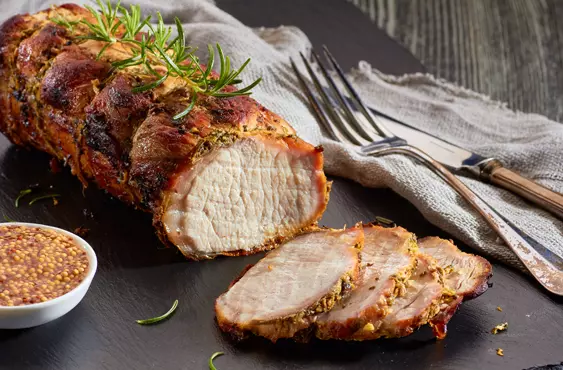
Marianne: I've done avocado oil mayonnaise underneath the skin. And part of it's because your turkey is a pretty lean bird and you want to add some good, healthy fat. You want it to sort of seal in that fat. Yeah, and I mix those fats with fresh herbs. So your quintessential sage, thyme, rosemary, cut those up, put those under the skin and let it roast, and it will be, it's just magical. Absolutely delicious.
Leah: Such good tips just from, again, estimating how much turkey you need to like yeah, elevating it with those herbs and the fat, especially and, and cooking it. And those are all really great tips. And so that's again, like, that's the turkey portion of it.
Healthier dessert tips
And then I definitely wanted to make sure again, like we hit on the desserts piece of it. So what are some of your favorites? I mean, when we think typical Thanksgiving desserts, obviously pumpkin pie is on there. Usually there's a pie of sorts, a pumpkin pie, an apple pie, a pecan pie, something like that. But we don't have to like limit ourselves or stay in the box of pie when it comes to Thanksgiving desserts.
And we'll talk about pie, but also, yeah, if your family just loves pie, what can we do to just like, tweak that a little bit or, still make it, you get those delicious fall flavors without tons of the added sugars or other funky ingredients in there.
Marianne: Yeah, I think simply switching out your refined sugar for your maple syrup, which quite frankly is a very fall flavor, that maple syrup. I have done the, just eliminating the crust again with my gluten and dairy free folks. I think it's on the website, the pumpkin, it's like a pumpkin custard. I make them in ramekins.
You could make it probably in a bigger dish. But it's really nice to make in little individual ramekins. It looks a little fancy. I make it with coconut milk but you could make it with a dairy milk and it's absolutely delicious. So it tastes like the filling of your pumpkin pie.
Leah: Yeah.
Marianne: Without the crust, and it's really satisfying, absolutely delicious. I also love to make like an apple cranberry crisp.
Leah: Mm-hmm.
Marianne: And I do that with maple syrup. I use, I love pecans and maybe some almond flour. I make the crumble on the top and absolutely delicious. Still gluten-free, still dairy free. If you wanted to do a little dollop of or pour a little bit of heavy cream over it for some healthy fat, you could certainly do that, but I love, I love fruit desserts. Apples are in season. I feel like you could do an apple crisp, it would be delicious.
Leah: Yep, for sure. Like the apples, the pumpkin, very fall types of desserts that you could base that off of, I mean, for me, I'm the chocolate lover. So dessert is like dessert's not worth it. And that's a stretch, but dessert's not worth it if it doesn't have some kind of chocolate in it. So like my mind goes to, okay, how could we get chocolate but some real food in there too? So like my first strawberries aren't necessarily a fall type of food, but like a chocolate dipped strawberry.
Like that's an easy, delicious, real food type of dessert that you could still do. And you could use some dark chocolate chips, melt those down and like get your strawberries out, dip those in there.
Marianne: You could do that with pears, with pear slices as well.
Leah: Well, that's a great idea.
Marianne: Which are in season. So, so do that same concept, same idea, and do it with a pear. And leave half the pear uncovered.
Leah: Uncovered.
Marianne: It looks very elegant. It's a beautiful…
Leah: There you go. That's an even better idea than, I mean, if people love strawberries, go the strawberry route. But yes, I, and I'm sure you could do the same thing with apples too. The sky is the limit, but yes, if you want to take advantage of the fall foliage or the fall fruits at that point. Yeah. Pears, that would be a great example to do that. So those are some great dessert ideas. Hopefully a little inspiration there.
Healthier beverage tips
I do want to just in these last couple of minutes before we wrap up, talk about beverages. because that can be a big part of the holiday celebration for many people. It is kind of more trendy nowadays.
Marianne, you and I were talking about this earlier, that it is a little trendier now to be, they call it sober curious or just going alcohol free. But that's not everybody's cup of tea necessarily. So whether you choose to partake in the alcoholic beverages or not, there are some healthier options out there.
We would, in terms of like from a nutritional standpoint, encourage limiting the alcohol as much as possible. Maybe abstaining if you're able to do that. Not only does alcohol add empty calories, it tends to lead to lowered inhibitions and overeating. You're just more likely to blow through some of those hunger and satiety signals a little bit more.
And maybe you would end up choosing foods or eating more than you normally would've chosen before than if you weren't drinking alcohol. So we again, we do want to focus on feeling our best this Thanksgiving. So just thinking about let's be judicious about what alcohol we might choose to indulge in or thinking about, you know, if alcohol makes me feel more fatigued or sluggish or kind of puts me on the couch the rest of the day, maybe I'm going to choose not to drink on this day.
I mean, simply put, alcohol is one of those little troublemakers that just might not make you feel your best. So Marianne, do you have any other suggestions or like an idea or two for people if you're just still looking to again, like kind of participate and be festive, but maybe not participate in alcohol?
Marianne: Yeah, absolutely. I am one of those people and, and mostly because, you know, I want to say Thanksgiving meal is already, for a lot of people, it's, it's a pretty big meal. And so adding alcohol on top of that could, you know, really make you sleepy. So if you want to have that energy and run with the kids or play a little tag football or whatever, I say abstain, which I happen to do.
We, our meal is in the middle of the day, so alcohol has never really been a big piece. But if you want to feel festive and be part of the crowd here, here's what I do. I take a lovely wine glass or a champagne flute if you want. I put a little bit of soda water, a splash of pomegranate juice.
Maybe a couple drops of bitters. Bitters, there's, or it's sort of having its day. It's kind of like a shrub, it's a, it's a, it's a herbaceous; you could even use apple cider vinegar, which is also sort of the groovy thing of the moment. And it just adds a little punch to your beverage. And then I add a sprig of rosemary.
It looks beautiful. It looks really festive. You feel like you're part of the celebration instead of being isolated and it tastes delicious. And I think it's a great way to abstain from alcohol and still feel fantastic.
Leah: Yeah, love that idea. So many great options. Yeah. And the bitters, the apple cider vinegar, just like actually some of those digestive aids is another way to just take it up to the next level.
Marianne: Yeah, absolutely.
Wrapping it up
Leah: So as we wrap up today's episode, we hope we've inspired you to try maybe a new recipe or two, or as Marianne so wisely said, like make one or two small tweaks, and then year after year, year you can build on some of these tweaks so that we're not changing up too many things at once.
But we invite you to explore some of the recipes that we talked about. They're on our, a lot of them are on our website, which is weightandwellness.com. You can check out also our Facebook and Instagram pages for some more inspiration or ideas. Or strategies to navigate through this Thanksgiving meal.
And so if you're not already following us on social media, just search for Nutritional Weight & Wellness on all the major social media platforms and we'll pop up there. So we want to thank Chef Marianne for being here. It was so good to have a chat with you and wishing all of our listeners a healthy and a happy Thanksgiving. Have a great day.
Share this Podcast
Upcoming Podcast Episodes:
October 12: Chef Marrianne’s Guide to Healthy Crockpot and Instant Pot Cooking
October 19: MCAS and Histamine Intolerance, From Symptoms to Support
October 26: The Sleep-Cravings Connection