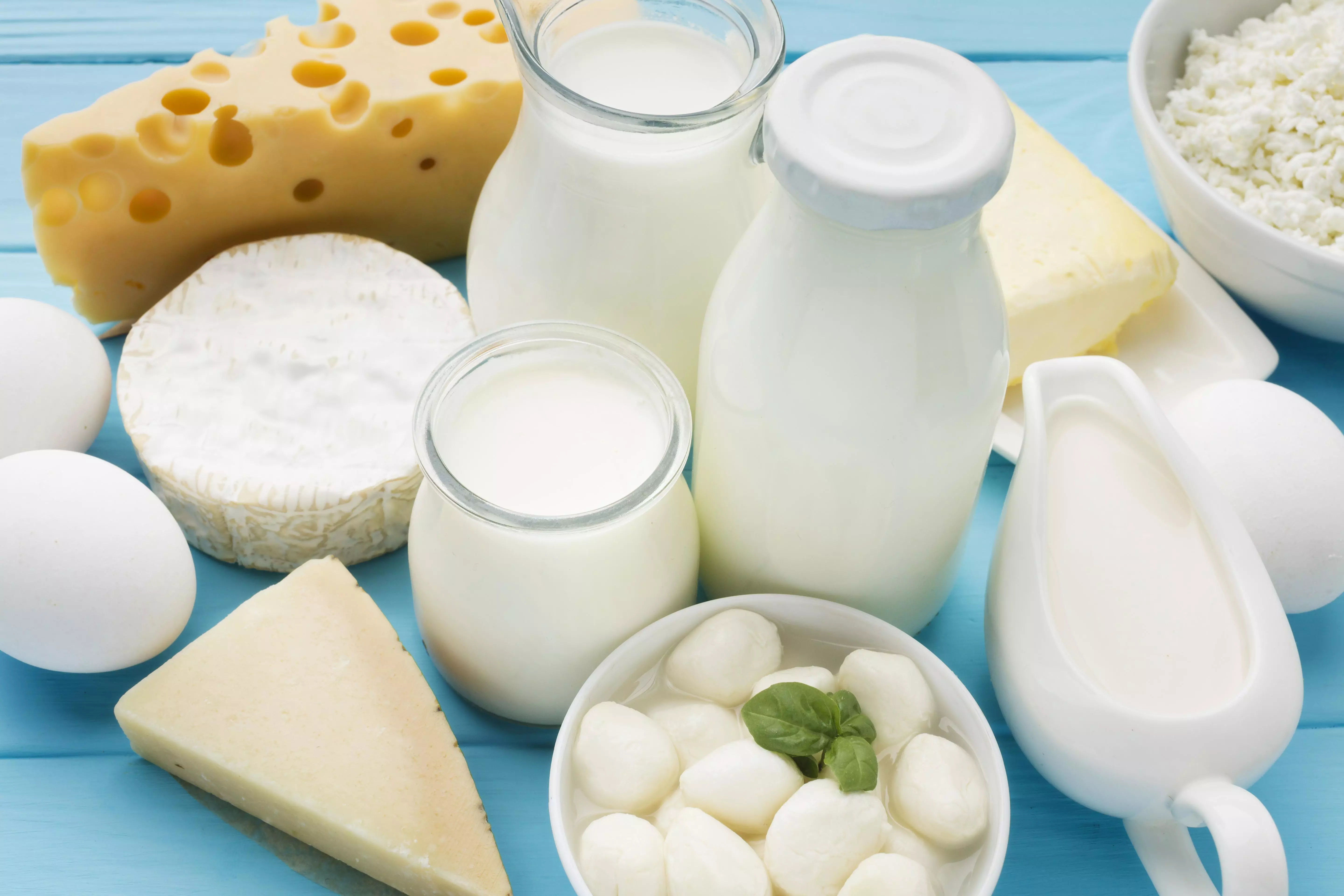
 We grow up hearing, “Drink your milk! You need it for strong bones.” While calcium is essential, milk isn’t the best source—and that may be a relief to hear for many of you who don't tolerate dairy well.
In this article, we’ll breakdown the best and worst sources of calcium, highlight plant-based foods that provide calcium, and discuss what to look for in a high-quality calcium supplement.
Calcium is best known for its role in building strong bones—about 99% of it is stored in the skeleton. But calcium’s importance goes far beyond bone health, playing a vital role in hormone release, nerve communication, and muscle function, including the heart.
Here's a key takeaway—if bone health is your goal, it’s important to know that calcium is just one piece of the puzzle. Bone strength depends on a combination of nutrients, lifestyle factors, and how well your body can absorb and use calcium—not just how much you consume.
The Myth About Dairy Products
The United States has one of the highest rates of dairy consumption, yet according to the National Osteoporosis Foundation about 54 million Americans have osteoporosis and low bone mass (osteopenia). The truth is bone health isn't dependent on how much milk or dairy products we consume. Even Harvard has challenged the idea that dairy is necessary for strong bones. In fact, many countries that consume very little dairy have some of the lowest rates of osteoporosis, and for most of human history we didn't consume dairy products.
Dairy isn’t well tolerated by everyone—about 65–70% of the world’s population has some degree of lactose intolerance and others react to the dairy proteins casein and/or whey. You can think of lactose intolerance as a spectrum and for many individuals symptoms are dose dependent or build up over time. For those affected by a dairy sensitivity or lactose intolerance, consuming too much, or any at all for some, can increase inflammation, which may negatively impact bone health. This isn’t to say you should avoid dairy entirely—if you tolerate it, incorporating plain yogurt, some cheese, or cottage cheese can be beneficial—but know that it’s not essential for bone strength.
Strong bones are primarily supported by lifestyle factors: regular movement, maintaining adequate vitamin D levels, eating a diet of real food, and limiting sugar, caffeine, alcohol and processed carbohydrates (which can all increase calcium loss).
Learn More: Dairy Intolerance: Causes, Symptoms, Solutions
Other Calcium Rich Foods:
At Nutritional Weight & Wellness we always believe food should be the first source of nutrients in our diet and, therefore, food is the best source of calcium for bones.
 But if you're allergic or sensitive to dairy or lactose intolerant don't worry; you can get adequate calcium from vegetables like broccoli, leafy greens, sardines, canned salmon with the bones and nuts.
-
Try our delicious Crunchy Broccoli Salad and Kale Salad to boost your calcium intake.
-
If you're a fan of sardines (in our experience you either love them or hate them) try the Sardine Salad with chickpeas.
Here's a great list of calcium sources we recommend adding to your own favorite recipes or dishes:
|
Food |
Serving Size |
Calcium (mg) |
|
Sardines, canned with bones |
3 oz |
325 |
|
Collard greens, cooked |
1 cup |
266 |
|
Broccoli, cooked |
1 cup |
180 |
|
Salmon, canned with bones |
3 oz |
180 |
|
Blackstrap molasses |
1 Tbsp |
135 |
|
Tahini (ground sesame seeds) |
2 Tbsp |
130 |
|
Arugula, raw |
1 cup |
125 |
|
Spinach, cooked |
½ cup |
120 |
|
Kale, cooked |
1 cup |
94 |
|
Kale, raw |
1 Tbsp |
90 |
|
Sesame seeds, whole |
1 cup |
88 |
|
Okra, raw |
1 cup |
81 |
|
Chia seeds |
1 Tbsp |
76 |
|
Bok choy, raw |
1 cup |
74 |
|
Almonds |
1 oz |
74 |
|
Broccoli, raw |
1 cup |
43 |
|
Watercress, raw |
1 cup |
41 |
Worst Calcium Sources: Fortified Foods and Calcium Carbonate
So, we covered why dairy foods and milk are not the best sources of calcium, especially if you don't tolerate dairy.
You may be wondering about those packaged foods that boast they have contain a lot of calcium.
Not so much, and here’s why.
Calcium Carbonate:
The added calcium found in orange juice, many breakfast cereals and even added to many brands of almond milk is calcium carbonate. Unfortunately, many calcium supplements also contain this same form of calcium. Calcium carbonate is the cheapest and least absorbable form of calcium available. In fact, large amounts of calcium carbonate can cause calcium to go into your soft tissues (including your arteries) and not your bones.
You read that right – even though you’re drinking added calcium in your fruit juices, your body isn’t able to absorb that form. What a waste!
Plus, orange juice is full of sugar. Although it’s natural sugar, drinking a 16-ounce glass of orange juice has just as much sugar as a can of soda and we know that sugar can increase calcium loss.
Forms that are more bioavailable include: calcium citrate, calcium malate, calcium glycinate, or MCHC.
Calcium Deficiency - Common Reasons to Supplement with Calcium
What are some symptoms of calcium deficiency? What areas of health do good sources of calcium support?
Take a look at this list of signs you may not be getting enough calcium:
-
Poor bone health, including osteoporosis, osteopenia, or osteomalacia (softening of the bone)
-
Muscle cramps (I would suggest supplementing with magnesium or adding electrolytes first for muscle cramps)
-
Low dietary intake of calcium, calcium supplements are supposed to fill the gaps not replace food
-
Poor digestive health and/or history of years of antacids (this can cause poor absorption of nutrients)
-
Taking other nutrient-depleting prescription drugs
Who Should Be Considering Calcium Supplements?
Anyone concerned about bone health:
Calcium is the most abundant mineral in the body and crucial for bone strength and like I mentioned nearly 99% of the body's calcium is stored in bones and teeth. If you've recently had a bone scan and results have shown osteopenia or osteoporosis, it's a good idea to take a calcium supplement to help prevent osteopenia, osteoporosis, and bone loss.
Calcium works synergistically with magnesium, vitamin D, K2, and trace minerals for optimal bone formation and muscle function so it's not just about supplementing with calcium. For optimal bone health calcium should be combined with vitamin D, magnesium, vitamin K2, protein, and resistance exercise. How they work together:
Magnesium (The Activator & Regulator)
- Activates vitamin D into its usable form, ensuring it can support calcium absorption.
- Helps regulate calcium balance in the blood and bones.
- Supports bone formation and flexibility, preventing brittleness.
- Around 50–60% of the body’s magnesium is stored in bone, where it helps maintain structural integrity.
Vitamin D (The Absorption Booster)
-
Increases calcium absorption from the gut.
-
Helps maintain proper blood calcium levels.
-
Without sufficient vitamin D, even high calcium intake may be poorly absorbed.
Calcium (The Building Block)
-
Provides the structural framework for bones and teeth.
-
Works with magnesium and vitamin D to ensure bone density and strength.
-
Needs proper regulation and guidance to avoid depositing in soft tissues.
Vitamin K2 (The Traffic Director)
-
Directs calcium into bones and teeth.
-
Prevents calcium from accumulating in soft tissues or blood vessels.
To learn more, listen to our podcast Dishing Up Nutrition as we did a comprehensive show on Top Bone Health Supplements.
Which Calcium Supplement is Right for You?
So if you've decided to add a daily calcium supplement, what form is most absorbable and beneficial? Here are our top picks...
-
Key Osteo Plus is our comprehensive supplement developed for bone health. It's ideal for anyone who has osteopenia or osteoporosis. Not only does it contain calcium, vitamin D, vitamin K2 and magnesium, but it contains other vitamins and minerals needed to support building bone. It contains enough vitamins and minerals that it doubles as a multivitamin. It comes in two convenient packets for the morning and evening.
-
Activated Calcium is our go-to calcium supplement. It's a unique product that's formulated to be easily absorbed, effective and protective. This is a great choice if you're already taking vitamin D3 with K2 and magnesium.
-
Activated Cal-Mag is a great option if you want to supplement with both calcium and magnesium. It also contains vitamin D3 and phosphorus. Calcium, magnesium and vitamin D work synergistically in the body and promote optimal absorption of one another. This supplement also contains phosphorus, which along with the calcium, vitamin D and magnesium, helps with bone mineral density, bone remodeling and muscle function.
-
Activated Chewable Calcium is ideal for those who only need to add a small amount of calcium. There's only 300 mg of calcium in 3 tablets. This is also good for those have a difficult time swallowing capsules and tablets. It has been formulated with calcium as MCHC, which is a highly absorbable form of calcium, along with a very small amount of magnesium and Vitamin D. The vitamin D and magnesium helps your body absorb calcium. This comes in a chocolate flavor.
How much calcium do you really need?
The recommended dietary allowance (RDA) for calcium is 1,000 mg per day for adult men ages 19–70 and adult women ages 19–50, and 1,200 mg per day for women ages 51 and older and adults over age 70. This includes both dietary intake and supplements. This isn't necessarily a one size fits all number. Some experts suggest that if you’re eating a diet rich in real, whole foods that don’t promote calcium loss—unlike the standard American diet—you may not need the full RDA to maintain optimal bone health.
If you're not sure what supplement or dosage is right for you we can help? Our dietitians and nutritionists at Nutritional Weight & Wellness will recommend both food and supplements based on YOUR needs during a virtual one-on-one nutrition counseling appointment.
Quick Recap
-
Calcium is essential for bone health, but it’s only one part of the equation—absorption, lifestyle, other key nutrients and overall diet also matter.
-
Dairy is not required for strong bones, and many people don’t tolerate it well; plant foods and fish with bones provide highly bioavailable calcium.
-
Fortified foods and calcium carbonate are poorly absorbed and don't support bone health effectively.
-
For a calcium supplement, the form matters significantly. If your supplement only lists calcium carbonate, consider switching to one that uses calcium citrate, calcium malate, calcium glycinate, or MCHC.
-
Strong bones are best supported by regular movement, adequate vitamin D, limiting sugar and processed foods, and using well-formulated supplements when needed.
For more information on calcium, check out these resources:
LISTEN: All About Calcium – Ask a Nutritionist - What calcium supplement should I take? Do I get enough calcium from my diet? Calcium is just for our bones, right? How much calcium should I take? Britni goes over all you need to know about calcium supplementation.
READ: Foods For Osteoporosis– want strong and healthy bones? Real food to the rescue! Find out what nutrients you need (calcium included) to help strengthen and protect your bones.
READ: Top Osteoporosis & Bone Health Supplements–our top recommendations on supplements to support your bones.
References
Harvard T.H. Chan School of Public Health. Calcium — The Nutrition Source. The Nutrition Source, Harvard T.H. Chan School of Public Health. Available at: https://nutritionsource.hsph.harvard.edu/calcium/ (accessed January 2026)
Hu L, Ji J, Li D, Meng J, Yu B. The combined effect of vitamin K and calcium on bone mineral density in humans: a meta-analysis of randomized controlled trials. J Orthop Surg Res. 2021 Oct 14;16(1):592. doi: 10.1186/s13018-021-02728-4. PMID: 34649591; PMCID: PMC8515712.
Share This Article