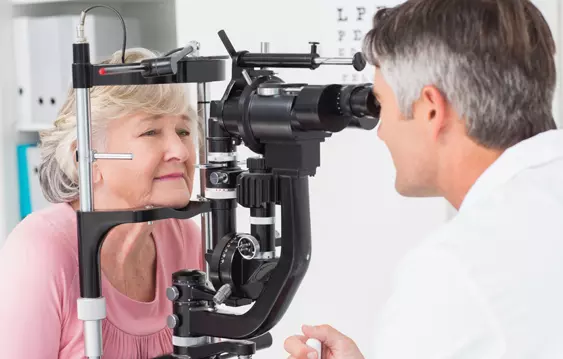
Nutrition for Macular Degeneration

By Leah Kleinschrodt, MS, RD, LD
December 1, 2025

maculardegeneration.jpg

Did you know that your eating patterns and daily foods choices can set the stage for lifelong clear vision, or a gradual decline into fuzzy, blurred objects and eventual vision loss?   

You may be surprised to learn that age-related macular degeneration (AMD) is the leading cause of blindness in adults over 60, according to the National Eye Institute.1

What Is Age Related Macular Degeneration (AMD)? 

In AMD, inflammation and reduced blood/oxygen flow causes damage to the photoreceptors (rods and cones) and blood vessels of the macula of the retina.

Symptoms of AMD include:

  • Blurred vision

  • Blind spots

  • Difficulty seeing in dim light

  • Difficulty switching to night vision

These symptoms get worse over time. 

Causes of Macular Degeneration

butter.jpg

Since the retina is rich in fatty acids, your eyes depend on the right kinds of dietary fats for stability and energy. A poor-quality diet high in processed foods, refined oils, and sugar increases oxidative stress—one of the key risk factors for AMD progression.

Dr. Knobbe's extensive research and clinical observations led him to argue that our sky-rocketing consumption of refined vegetable oils and damaged fats—like soybean, corn, and canola— over the last century is one of the most critical factors in the increasing prevalence of AMD today.  

Vegetable oils and refined fats, which include soybean, canola, corn, and cottonseed oils, as well as hydrogenated and partially-hydrogenated oils, undergo extensive heat and chemical processing. By the end of that process, these damaged fats are easily oxidized and can worsen inflammation in eye tissues. 

To add insult to injury, these types of fats also make their way into most man-made, high-sugar, ultra-processed foods, such as cakes, pastries, fried foods, salad dressings, dips, margarines, coffee creamers, cooking oils, and more. That makes these foods a double-whammy of inflammation for our eyes! A macular degeneration diet should eliminate these oils and focus instead on nutrient-dense foods that calm inflammation and nourish your retina.

Foods To Avoid For Macular Degeneration 


Avoiding or minimizing these foods can help prevent or slow disease progression:

  • Vegetable oils and refined fats: 

  • Soybean oil 

  • Canola oil 

  • Corn oil 

  • Cottonseed oil 

  • Rice bran oil 

  • Grapeseed oil 

  • Hydrogenated and partially hydrogenated oils 

  • High-sugar, processed carbohydrates containing these damaged fats, like cakes, pastries, fried foods, chips, crackers, etc.  

  • Salad dressings, dips, margarines, coffee creamers, and cooking oils containing any of the damaged, refined fats (check those labels!) 

As we often say on the podcast, if an oil was made in a factory, it’s likely not helping your eyes or your overall health. Choose oils that could be made in your kitchen—pressed, churned, or rendered from whole foods.

Nutrition To Prevent AMD & Support Eye Health 
podcast_fish-salmon.jpg

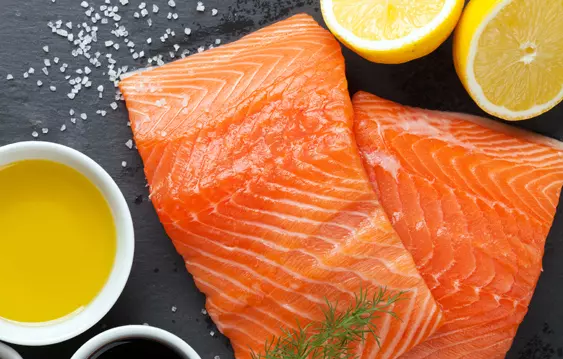
To prevent and treat AMD (age related macular degeneration), Dr. Knobbe encourages his patients, and we full-heartedly agree, to ditch the modern, inflammatory oils in their diets and return to traditional, anti-inflammatory, nutrient-rich fats instead. 

These are the fats that our great-grandparents used every day: organic, grass-fed animal fats like butter, lard and tallow (beef fat), pastured eggs, full-fat dairy, and wild-caught fish, along with fats contained in pastured meats and organs (liver, heart, kidneys).  

Not only are the fatty acids in these foods whole and intact, they are also wonderful sources of vital fat-soluble nutrients, like vitamin A, vitamin D, and vitamin K2, all of which are crucial for retina development in babies and lifelong eye health. 

Dr. Knobbe also gives special mention to the omega-3 fatty acids, especially DHA. The highest concentration of DHA in the retina is found in the same photoreceptors (rods/cones) mentioned above.  

Our best food sources of omega-3 fatty acids and DHA are fatty fish like salmon and sardines, algae, pastured eggs, and cod-liver oil.  Regular consumption of fatty fish can help reduce the risk of developing age related macular degeneration.

If you don't eat a diet rich in fatty fish or eggs, supplementing with omega-3 fatty acids or DHA can also be a smart prevention plan for age related eye diseases like amd. 

Best Foods To Include For Macular Degeneration 

First and foremost, I'd recommend keeping your blood sugar stable throughout the day. This will help you protect all those vessels and tissues of your eyes and slow the progression of amd.  

You can do this by eating a balance of protein, healthy fats and fruit/veggie carbs at every meal and snack.  

Then when you are looking for healthy fats to incorporate, we like to employ the “good/better/best” spectrum, where you upgrade your products to the level you can.   

For example, avocado oil, coconut oil, and olive oil are your best choices. However, an organic, expeller-pressed, or cold-pressed vegetable oil (like soybean, canola, corn, etc.) is definitely a better choice than a conventional vegetable oil.  

I'm cautious about using any kind of soybean oil with clients because of it's inflammatory nature and thankfully there are a lot more readily available naturally fatty foods and healthy oils to choose from nowadays.   

These healthy fats are great options for supporting the tissues and fatty acids in the eye:  

  • Organic, grass-fed butter, lard, or tallow

  • Pastured eggs, especially the yolks. Eggs are a great source of lutein and zeaxanthin, which can help control macular degeneration.

  • Full-fat dairy, if tolerated

Wild-caught fish, particularly fatty fish (rich in omega-3 fatty acids and DHA): 

  •  Salmon 

  • Mackerel 

  • Anchovies 

  • Sardines 

  • Herring  

  • Pastured meats and organs (liver, heart, kidneys) 

Healthy cooking oils: 

  • Olive oil (for low heat temps or salad dressings) 

  • Avocado oil 

  • Coconut oil  

  • Ghee (clarified butter good in high heat temps) 

Best Fruits and Vegetables for Eye Health

Eating a diet rich in various colorful, whole fruits and vegetables is one of the most effective ways to protect your eye health. These certain foods are rich in antioxidants that reduce inflammation, strengthen retinal blood vessels, and protect against age-related macular degeneration (AMD).

Here are some of the best fruits and vegetables to include regularly:

  • Dark Leafy greens (spinach, kale, collard greens, turnip greens, mustard greens, Brussels sprouts) are high rich in lutein and zeaxanthin.

  • Orange and yellow vegetables (carrots, sweet potatoes, winter squash) — packed with beta carotene and vitamin A precursors.

  • Cruciferous and green veggies (broccoli, bell peppers) — high in vitamin C and antioxidants, important for vision health.

  • Citrus fruits (oranges, grapefruit, lemons, kiwi) — loaded with vitamin C.

  • Berries (blueberries, strawberries, blackberries, raspberries) — rich in anthocyanins and antioxidants.

  • Orange fruits (mango, cantaloupe, peaches) — provide carotenoids and beta carotene.

Dietary supplements to consider for macular degeneration:

While there is no cure for macular degeneration, a diet rich in healthy fats and certain nutrients can decrease your risk factors or even slow the progression of AMD. Choosing anti-inflammatory foods, especially healthy fats, will give you the nutrients you need to take good care of, not only your eyes, but your overall health! 

For extra support of we suggest the following dietary supplements:

  • Vitamin C

  • Vitamin E

  • Zinc

  • Lutein and Zeaxanthin (found in Ortho Molecular 4Sight)

  • DHA (omega 3 fatty acids)

Our registered and licensed dietitians and nutritionists can work with you and your ophthalmologist to come up with a meal plan and key nutritional supplements to help support your eye health and reduce risk factors for age related macular degeneration.  

For more information on nutrition for eye health, check out these resources:  

LISTEN: Client Story - Mike & Marcia Stabilize Macular Degeneration. Leah Kleinschrodt sits down with Mike and Marcia, two of our clients who share how small nutrition changes made a big impact on their lives. Hear about how they learned to stabilize their macular degeneration disease progression with real food, their shared stories of cochlear implants, and how they learned the value of working together toward their health goals.

LISTEN: Managing Dry Eyes – Ask A Nutritionist podcast- Dry eye syndrome is a very common eye condition caused by insufficient tear production, which itself can be caused by many different things. Tune in to this episode with Britni to find out what you can do to support eye health with your own natural tears. 

LISTEN: Food Tips For Better Eye Health - Join two nutritionists as they discuss eye health with Dr. Chris Knobbe. They cover which foods to eat and which foods to avoid as well as nutritional supplements that can contribute to better eye health. 


Resources 

  1. Knobbe, CA. Ancestral Dietary Strategy to Prevent and Treat Macular Degeneration. Springville, UT: Vervante Corporation; 2016. 


About the author

Leah is a licensed dietitian with Nutritional Weight & Wellness. Leah’s natural inclination toward health began to falter in college as she fell victim to the low-fat, high-carbohydrate, low-calorie dogma of the time. It didn’t take long for her body to start showing signs of rebellion. When Leah found Nutritional Weight & Wellness and began eating the Weight & Wellness Way of real food, in balance, her body swiftly reacted. Leah continues to be amazed each and every day at the positive impact that nutrition has had on her own health. Knowing how wonderful that feels, she is passionate about helping as many people as she can find their own relief. Leah is a licensed dietician through the Minnesota Board of Nutrition and Dietetics. She received her bachelor’s degree in Exercise Science from the University of Minnesota, Duluth. Most recently she completed her M.S. in Nutrition from the University of Minnesota, Twin Cities.

View all posts by Leah Kleinschrodt, MS, RD, LD

Comments

Michele
I notice that Annie's dressings use soybean oil. But it is expeller-pressed. Is that ok, or is any soybean oil bad?
April 25, 2018 at 9:26 pm

admin

Employing the “good/better/best” spectrum: an organic, expeller-pressed, or cold-pressed vegetable oil (like soybean, canola, corn, etc.) is definitely a better choice than a conventional vegetable oil. That said, I am still cautious with any kind of soybean oil, and encourage my clients to choose oils that are made from naturally fatty foods more often than not -- like olive oil, avocado oil, and coconut oil.

Michele
One more--how do you know you are buying pastured eggs?
June 7, 2018 at 8:45 pm

admin

It will say on the package that it was pasture raised.

Michele
Is that the same as "cage free"?
June 13, 2018 at 2:07 pm

admin

“Cage-free” eggs mean that the hens were not confined to a cage but are typically not given access to the outdoors. “Free-range” means they were given continues access to the outdoors during their production cycle but are not often outside. “Pasture-raised” means that the hens were given ample space to roam outdoors but also have access to a barn. Hope this helps.

Steve Rekedal
Please add to subscriber list. Thanks!
March 28, 2019 at 3:10 am

admin

Added!

LK
I see that you say coconut oil is okay to use when one has macular degeneration, but all other information I've read recommends NOT using coconut oil. I'm a bit confused. Is it good or not?
January 21, 2020 at 1:16 pm

admin

Coconut oil is a great, healthy fat to include in your diet. Here is a podcast with lots of great information on the Best Fats for Cooking 

James
I have been eating unrefined cold pressed organic coconut oil for about two years. On my last annual eye exam I was diagnosed with dry macular degeneration in my left eye. Should I stop using the coconut oil?
April 3, 2020 at 7:01 am

admin

No. The coconut oil is a great healthy fat that helps with hydration of our tissues. You may benefit from including DHA, one of the omega 3 fatty acids, or a high-quality fish oil into your routine. See this article and its accompanying podcast for more information .

James Fitzhenry
Do you consider flaxseed oil to be a vegetable oil? Is it also bad for us?
July 3, 2020 at 4:19 pm

admin

A cold-pressed or unrefined flaxseed oil is fine to include in a real foods diet. This is a delicate oil that should not be heated.

carolyn
A question
I am taking a Liposomal vitamin C liquid which contains sunflower oil. I take high doses of this daily due to health issues and wondered if this oil could be harmful to eye health?

thanks
October 10, 2020 at 1:39 pm

admin

I’d say if the ingredients list or the manufacturer’s website doesn’t specify if the sunflower oil used is cold-pressed, expeller-pressed, or unrefined, then it is probably a refined oil and it would be best to look for an alternative product that uses a better carrier oil like MCT oil or coconut oil.

jeanlovett99@gmail.com
What kind of oil/fat do you recommend for salad dressing if not using vegetable , olive, or coconut oil?
January 19, 2021 at 11:03 am

admin

Avocado oil is a great option.  Here is a link to a few other recipes on our website

Dev
How about rice bran oil ? Which oil is best for cooking and good for eyesight ?
March 26, 2021 at 8:22 am

admin

Rice bran oil is a refined oil.  When trying to figure out if the oil is a healthy oil, ask “is the source of the oil fatty” if the answer is no, then it’s a refined oil.  Does rice have a high fat content? No, it has a high carb content and a trace amount of fat.  In order to extract that trace amount, the usual method is to take the raw material (rice) heat it very hot and extract the oil with chemical solvents, usually hexane gas.  Mono and polyunsaturated fats are very sensitive to heat, the type of fat rice bran oil is (and the other vegetable and seed oils)  This process damages the fat which in turn damages you after you eat it.

Rice brain oil also has a very high omega 6 content and really no omega 3 fatty acids.  In an ideal world our diet would have at least equal parts omega 3 to omega 6 fatty acids, unfortunately the standard American diet has a very imbalanced 15:1 omega 6 to omega 3 ratio.  Adding this fat to the diet would contribute to that pro-inflammatory ratio.

The best fats for eyes is DHA fatty acids:

The S.M.A.S.H Fish – Salmon, Mackeral, Anchovies, Sardines, Herring

And

Egg yolks (pasture-raised – the hens need to eat bugs and small animals for DHA, if they are vegetarian fed the food source is grains.)

As far as cooking oils – using oils that are anti-inflammatory protect the eyes. 

Saturated fats withstand heat the best so fats that are rendered from animal products work well, bacon grease, duck fat, tallow, lard.  Also coconut oil has a high saturated fat content and can take high temps without degrading.  Avocado oil is not saturated but can be used in higher heat cooking.  It’s a great substitute for vegetable oil because of its neutral flavor.

For lower temps – Olive oil and butter (high saturated fat but will burn at high temps because of the milk solids).

To care for the eyes it’s a mix of nutrients from colorful vegetables that are most supportive (along with DHA) and having enough fat for those wonderful nutrients to be absorbed and be able to be used.  This along with a low sugar, anti-inflammatory diet go a very long way in protecting the eyes.

Guido
What oil do you recommend to use for salad dressing?
May 7, 2021 at 12:02 pm

admin

For salad dressing, we'd recommend extra-virgin olive oil (look for cold-pressed).

We have a great, versatile recipe here

If you're looking for tips for purchasing a store-bought dressing, check out The Deli Detective Reports on Salad Dressings

Marilyn Jackson
My husband was diagnosed yesterday with MD. Dr started him on Systane I Caps and s zinc supplement.
I want to help by introducing foods that will help slow down progression.
Help!!
I don't have a clue where to start, I'm looking for meal planning ideas, recipes and especially interested in amount of coffee he should have daily. He currently drinks 6-8 large cups of decaf coffee!
Thank you for any help you can provide.
Marilyn Jackson

July 9, 2021 at 11:54 am

admin

I’d recommend a nutrition consultation to help with where to start and basic meal planning. You could also purchase Chris Knobbe’s book (Ancestral Dietary Strategy to Prevent and Treat Macular Degeneration) or listen to the following Dishing Up Nutrition episode:

Macular Degeneration

Michelle
At age 69, I was diagnosed with wet Mac D in my right eye in 2020. What is the best course of action for me to take at this point? My diet has always included as much organic food as possible. That said, I have also had my fair share of fast and fried food. Is there a way to slow the progression? My left eye is 2020 although, my Retinal Dr says I have dry Mac D in it, I haven't had any problems with it.
September 26, 2023 at 10:22 am

krueb

We would recommend making an appointment with a nutritionist who can develop a food plan specific to your needs.

First and foremost, we'd recommend keeping your blood sugar stable throughout the day (eating a balance of protein, healthy fats and fruit/veggie carbs at every meal and snack).

While there is no cure for macular degeneration, high dose supplements of vitamins C, E, A, and zinc have been shown to slow the progression from the initial dry macular degeneration to the advanced wet macular degeneration. 

Leave a comment

Your email address will not be published. Required fields are marked *

Back To Top