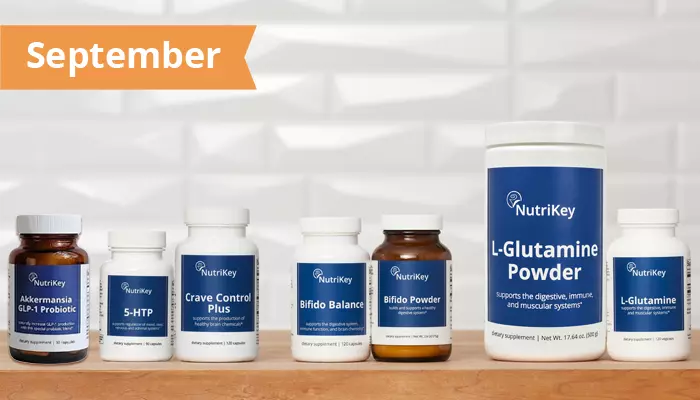
Quick answer: L-glutamine is the most abundant amino acid in the body and plays a key role in gut lining repair, immune function, and reducing sugar or alcohol cravings. Most people take 500mg–5g (roughly ¼–½ tsp powder or two capsules) before meals, 2–3 times a day, for at least 4 months to notice lasting benefits.
In this article, we are going to tackle the most common questions we get about l-glutamine: What does l-glutamine do? Would I be a good candidate for l-glutamine? What are the best foods? How much l-glutamine should I take? Should glutamine be taken with or without food? How long should I take l-glutamine? We’ll answer all these questions plus give you meal plan ideas and a success story to go along with this useful information! Let’s dive in:
You may benefit from l glutamine if you show any of these symptoms:
-
Anxiety
-
Poor wound healing
-
Slow recovery after workouts
-
Digestive issues like Colitis, inflammatory bowel disease, diverticulitis, Crohn’s, celiac disease, or symptoms from food sensitivities
What Does L-Glutamine Do? Benefits of L-Glutamine
Quick answer: L-glutamine's best-supported uses are supporting gut lining repair, aiding immune function (especially during illness or recovery), and helping reduce sugar or alcohol cravings. It's the most abundant amino acid in the body and the primary fuel source for the cells lining your intestines.
L-Glutamine Supports the Digestive Tract:
L-glutamine is one of the most important nutrients for a healthy digestive tract because of its ability to maintain the integrity of the intestinal wall. This essential amino acid (in fact it’s the most abundant of amino acids in the body) heals all tissue in the body, especially those irritated tissues in the digestive tract.
“L-Glutamine has helped to heal my intestines after years of periodic antibiotics. Along with NutriKey’s Bifido probiotics, it is part of a dynamic duo. A terrific value.” – Susan V.
L-Glutamine Supports Anxiety:
L-glutamine is also known as the calming amino acid since it’s very effective at reducing anxiety,
L-Glutamine Supports the Reduction of Cravings:
Clinically, we've found glutamine effective at reducing sugar and alcohol cravings, and some treatment centers use it for this reason.
L-Glutamine Supports the Immune System:
Glutamine plays a meaningful role in immune function, particularly for people who are hospitalized, fighting an infection, or under heavy physical stress. A 2011 study in the Yonsei Medical Journal found glutamine supports immune function in hospitalized patients.² More recently, a 2024 study in the Journal of the International Society of Sports Nutrition found that three weeks of L-glutamine supplementation in combat-sport athletes raised salivary immunoglobulin A, improved the testosterone-to-cortisol ratio, and reduced upper respiratory infections compared to placebo.³
Dr. Mark Hyman explains it like this: “Your entire immune system (and your body) is protected from the toxic environment in your gut by a layer only one cell thick. This thin layer covers a surface area the size of a tennis court—yet it’s basically containing a sewer. If that barrier is damaged, you will get sick and create an overactive immune system, producing inflammation throughout the body.”
Repairing the gut lining can be done by getting enough gut-healing nutrients, like l-glutamine. Clinically, we have found this to be true with our clients looking for improved immune function, better digestion, and fewer cravings.
What Are the Best Food Sources of L-Glutamine?
Quick answer: For this essential amino acid, we're lucky that all animal protein foods are great sources of glutamine. The long list includes beef, bison, chicken, fish, free-range eggs, grass-fed dairy, lamb, pork and turkey.
Because the Weight & Wellness real food way of eating encourages animal protein at all meals and most snacks, you have plenty of opportunity to get a variety of meats (and therefore glutamine!) into your day. What might that look like?
Breakfast:
Lunch:
Dinner:
Another natural and tasty way to incorporate a real food source of l-glutamine is bone broth. Think of it as a glutamine drink! You can easily make your own to sip like a therapeutic beverage, use as a base for a healing soup, or incorporate into your cooking (like when you make your grains or meats).
Glutamine Supplementation:
If you or someone in your family isn’t eating sufficient amounts of animal protein and/or has the symptoms mentioned above and still needs relief, we recommend taking glutamine supplements.
How Much L-Glutamine Should You Take?
Quick answer: Most people take two capsules before or with each meal, or ¼–½ tsp of powder in water before each meal, 2–3 times per day.
How To Take Glutamine Supplements
A common question we get is, “how much l-glutamine should I take?”
L-Glutamine supplements come in two forms: capsules or powder. Our nutritionists recommend taking two capsules before or with every meal if you are doing the capsule form. For the powder, take ¼ to ½ tsp. in water before every meal. Or, if your cravings come and go, some clients put the l-glutamine powder right on their tongue to make the cravings go away immediately. You can open up the capsule for that quick dose of powder or keep a canister of the powder form on hand.
When Should You Take L-Glutamine?
Quick answer: Ideally 10–15 minutes before a meal on an empty stomach, 2–3 times a day — but taking it with food is far better than not taking it at all.
Ideally, it is best to take glutamine supplements about 10-15 minutes before a meal, on an empty stomach and we typically recommend taking l-glutamine 2-3 times per day (so before 2-3 meals per day). However, it’s better to get it in rather than not, so do the best you can in taking glutamine with or without food.
How Long Should You Take L-Glutamine?
Quick answer: Most people need at least 4 months of daily use to see lasting benefit; some stay on it for up to 12 months or use it as needed based on symptoms.
The length of time to stay on l-glutamine depends on the person. For most people at least 4 months of daily use is beneficial and while for others, it could be 12 months. You can also go by symptoms. Some people find relief right away, but notice a difference when they stop taking glutamine supplements so they add it back in. For example, if you are taking l-glutamine for reflux, if your reflux symptoms flare up, you might want to continue a dose of l-glutamine at night and notice how your body feels.
You can discuss your specific needs with a nutritionist or dietitian who will help you find what you’d need for maintenance.
Our go-to spot for high quality supplements: NutriKey!
Who Could Benefit From L-Glutamine Supplements?
If you have anxiety, sugar or alcohol cravings, constipation or diarrhea, a poor immune system, low muscle mass, poor wound healing or slow recovery after workouts, you may want to consider supplemental glutamine. Make sure you are getting in enough animal protein at meals and snacks plus incorporate a high-quality l-glutamine supplement to support the healing of all your tissues.
Read Case Study on L-Glutamine
Frequently Asked Questions About L-Glutamine
- What is L-glutamine? L-glutamine is the most abundant amino acid in the human body. It's the primary fuel source for the cells lining the intestines and plays a supporting role in immune function and recovery.
- Does L-glutamine actually heal your gut? This essential amino acid (in fact it’s the most abundant of amino acids in the body) heals all tissue in the body, especially those irritated tissues in the digestive tract. It's a support tool, not a proven cure-all, for gut repair.
- Does L-glutamine help with sugar or alcohol cravings? Many people find it helps reduce sugar and alcohol cravings, and some treatment centers use it for this purpose, but the supporting research is still mostly clinical observation rather than large controlled trials.
- How much L-glutamine should you take per day? A common approach is two capsules or ¼–½ tsp of powder before each meal, 2–3 times daily. Some research on gut permeability used higher short-term doses (30g+/day) under supervision — check with a nutritionist or dietitian before going above standard supplement label doses.
- Is L-glutamine safe to take long term? For most healthy adults, standard supplemental doses are considered low-risk for extended use (many people use it for 4–12 months). Anyone with kidney disease, liver disease, or another chronic condition should check with their doctor first.
- When is the best time to take L-glutamine? About 10–15 minutes before a meal, on an empty stomach, 2–3 times a day. Taking it with food is still better than skipping it.
Learn more about l-glutamine's connection to your health:
- Listen: How to Control Cravings
- Read: 6 Important Supplements You Should Know More About
- Case Study: How L-Glutamine Supplementation Helped Me Control My Sugar Cravings
- Get Help: Learn About Personalized Nutrition Counseling From Nutrition Weight & Wellness
Reference
-
Abbasi, F., Haghighat Lari, M.M., Khosravi, G.R., Mansouri, E., Payandeh, N., & Milajerdi, A. (2024). A systematic review and meta-analysis of clinical trials on the effects of glutamine supplementation on gut permeability in adults. Amino Acids, 56(1). https://pubmed.ncbi.nlm.nih.gov/39397201/
-
Kim, H.A. (2011). Glutamine as an immunonutrient. Yonsei Medical Journal. PMCID: PMC3220259. http://www.ncbi.nlm.nih.gov/pubmed/22028151
-
Lu, T.-L., et al. (2024). Supplementation of L-glutamine enhanced mucosal immunity and improved hormonal status of combat-sport athletes. Journal of the International Society of Sports Nutrition. https://pubmed.ncbi.nlm.nih.gov/38193521/
Share This Article